

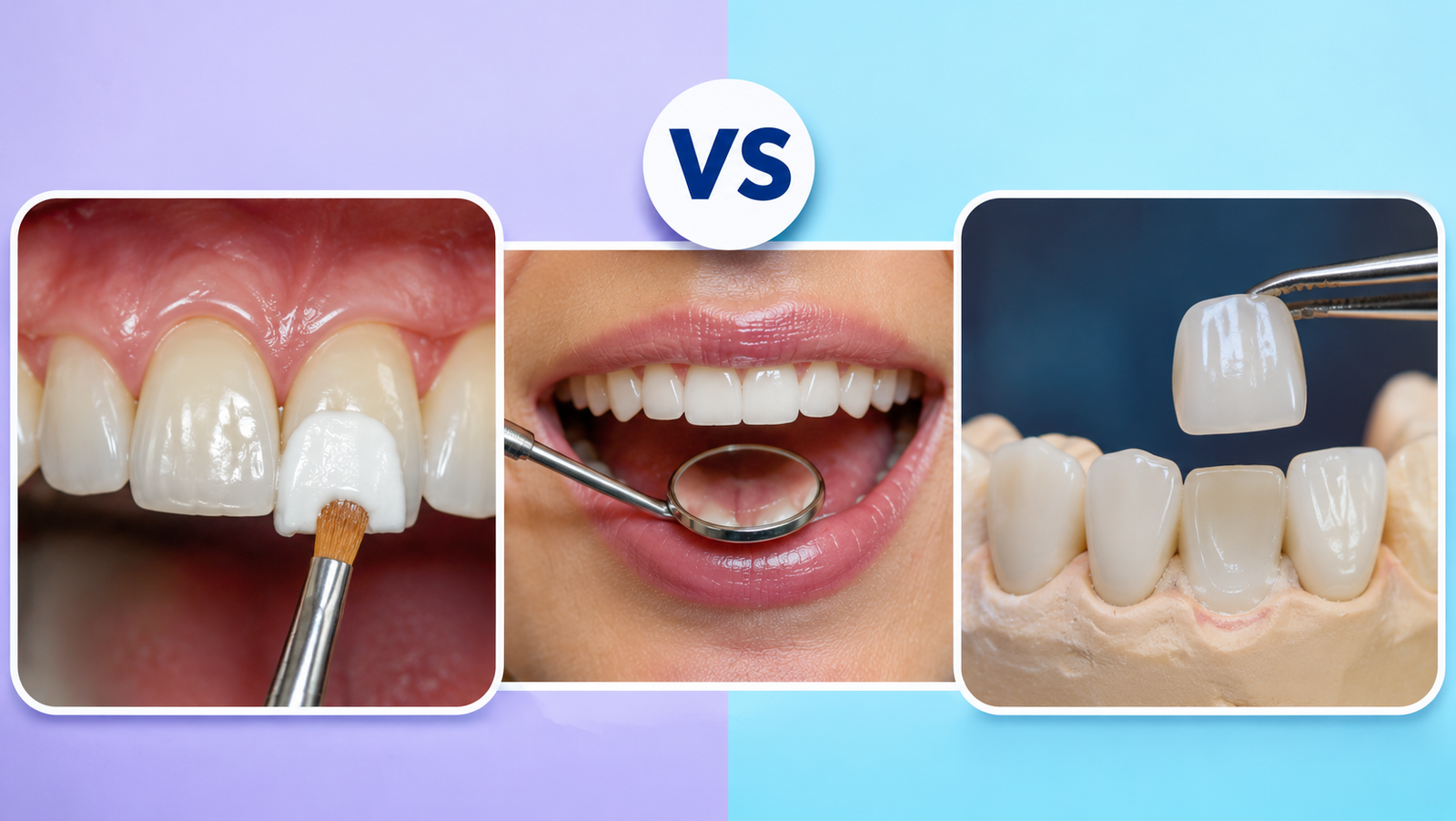

In the dental bonding vs veneers choice, bonding is the quicker, gentler and usually lower-cost option, best for small chips, minor gaps and small cosmetic touch-ups. Veneers cost more upfront but are stronger, more stain-resistant and last longer, which makes them better for bigger changes in colour, shape or several teeth at once. Bonding can often be done in a single visit, while veneers take a few visits over two to three weeks.
What Is Dental Bonding?
Dental bonding, also called composite bonding or cosmetic bonding, uses a tooth-coloured resin. The dentist roughens the tooth surface slightly, applies the resin, sculpts it into shape, hardens it with a special light and then polishes it to blend in with your natural tooth.
It’s often done in one visit, usually without any anaesthesia unless a cavity is involved, and it needs little to no removal of healthy enamel. That’s the main reason people like it.
What Are Veneers?
Veneers are thin shells, most commonly made of porcelain or ceramic, that are made in a lab and bonded to the front surface of your teeth. A thin layer of enamel is usually removed first so the veneer sits flush and looks natural. There are also composite veneers, which sit somewhere between bonding and porcelain. You can read about the types on our veneers and smile designing page.
Dental Bonding vs Veneers: Side-by-Side Comparison
| Factor | Dental Bonding | Veneers |
|---|---|---|
| Material | Composite resin, shaped on the tooth | Porcelain or ceramic shells made in a lab |
| Enamel removal | Little to none | A thin layer is usually removed |
| Visits | Often one | Usually two or three |
| Time | About an hour per tooth or so | Two to three weeks overall |
| Upfront cost | Generally lower | Generally higher |
| How long it lasts | Several years, often around five to ten with care | Ten to fifteen years or more for porcelain, with care |
| Stain resistance | Can stain over time | Very resistant |
| Strength | Can chip or wear | Stronger and more durable |
| Repairs | Easy to fix or touch up | Often needs replacing if damaged |
| Reversible? | Mostly | No |
| Best for | Small fixes on one or a few teeth | Bigger changes, several teeth, full smile makeovers |
Tooth Bonding Cost vs Veneers: What Should You Expect?
A lot of people ask about tooth bonding cost first, so here’s the honest picture without throwing numbers at you. Bonding is generally the more affordable option upfront, because it needs no lab work and takes less chair time. Veneers cost more at the start, since they involve lab fabrication, more visits and better-quality materials.
But the real comparison is cost over time. Bonding may need touching up or replacing sooner, while porcelain veneers can last much longer. So the cheaper option now isn’t always the cheaper option in ten years.
The exact price for you depends on:
- how many teeth are being treated
- the material and the type of veneer
- how much shaping or correction is needed
- the condition of your teeth and gums to begin with
- the dentist’s experience and, for veneers, the lab quality
The only reliable way to get a clear idea is to have a dentist examine your teeth and explain the plan.
Which Is Better for a Chipped Tooth?
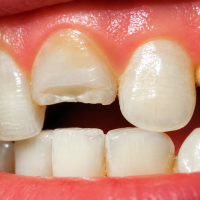
For chipped tooth repair, bonding is usually the first thing a dentist considers. If the chip is small, the resin can be built up and shaped in a single visit, and it blends in well. It’s quick, it protects your natural tooth, and it can be redone later if needed.
Veneers or a crown make more sense when the chip is large, the tooth is weak or badly damaged, or there’s more than one chipped tooth and you also want a more even look. A large chip may also need to be checked for damage deeper inside the tooth.
Which Is Better for Gaps, Stains and Uneven Teeth?
- Small gaps: Bonding works well and is the quicker choice. Larger gaps or several gaps tend to suit veneers or aligners better.
- Stained teeth: If whitening hasn’t worked, veneers cover the stain and resist new ones. Bonding can hide stains too, but it may pick up new ones over time.
- Uneven or short teeth: A small adjustment can be done with bonding. For a more noticeable change in length and shape, veneers give a smoother, more polished result.
- Crooked teeth: Neither is a substitute for proper straightening if the teeth are quite crowded. A dentist may suggest aligners first.
Pros and Cons at a Glance
Dental bonding
- Pros: quick, usually one visit, very little enamel removed, easy to repair, lower upfront cost
- Cons: can stain and chip, shorter lifespan, less natural shine than porcelain over time
Veneers
- Pros: natural-looking, strong, stain-resistant, long-lasting, can change colour, shape and size together
- Cons: higher upfront cost, enamel removal is permanent, takes more visits, harder to repair
How Long Do They Last, and How Do You Look After Them?
Bonding typically lasts several years, while porcelain veneers can last ten to fifteen years or more. Whichever you choose, the habits are much the same. Brush twice a day with a soft brush and floss daily. Don’t bite your nails, open packets with your teeth or chew ice and pen caps. Go easy on strong tea, coffee and tobacco, especially with bonding. Tell your dentist if you grind your teeth, since you may need a night guard. And get a check-up and cleaning about every six months.
Can You Start With Bonding and Upgrade to Veneers Later?
Yes, in many cases. Because bonding removes little or no enamel, it’s a good way to improve a small problem now and keep your options open. If you later want a bigger change, a dentist can usually replace the bonding with veneers. It doesn’t work the other way round, since the enamel removed for veneers can’t be put back.
How to Decide Between Bonding and Veneers
A few simple questions can help:
- Is it a small fix on one or two teeth, or a change across your whole smile?
- Do you want the result today, or are you happy to wait a few weeks?
- Are you comfortable with a permanent change to your enamel?
- Do you want the longest-lasting option, or the gentlest one?
- What does your dentist see after examining your teeth and bite?
That last question matters most. A good dentist will tell you honestly which is enough for your teeth, rather than automatically recommending the bigger treatment.
Frequently Asked Questions
What is the main difference between dental bonding and veneers?
Bonding uses resin shaped directly on your tooth, often in one visit. Veneers are lab-made shells bonded over the tooth, usually across a few visits. Veneers are stronger and last longer, and bonding is quicker and gentler.
Which lasts longer, bonding or veneers?
Porcelain veneers generally last longer, often ten to fifteen years or more, compared with several years for bonding.
Is composite bonding cheaper than veneers?
Generally yes, upfront. Over the long run the difference can narrow, because bonding may need more frequent touch-ups or replacement.
Does dental bonding hurt?
Usually not. Most bonding is done without anaesthesia, as little or no enamel is removed. Veneers are typically done with local anaesthesia, so they’re comfortable too.
Can bonding fix a chipped tooth?
Yes, for small to moderate chips it’s often the first choice. Larger chips or weakened teeth may need a veneer or crown.
Does bonding stain?
It can, over time, especially with tea, coffee and tobacco. Porcelain veneers resist stains much better.
Is bonding reversible?
Mostly, since little or no enamel is removed. Veneers are not reversible, because enamel is shaped to fit them.
Can I whiten bonded teeth or veneers?
No. Whitening only works on natural tooth surfaces, so it’s best to whiten before choosing the shade of bonding or veneers.
Considering Bonding in Mohali?
Whether bonding, veneers or something else suits you depends on your teeth, and a short consultation will tell you. Explore our expert dental solutions in Mohali, or book a visit at TrueSmilez Dental Clinic and we’ll help you choose what fits.