


How Painful Is a Root Canal? What Patients Really Experience
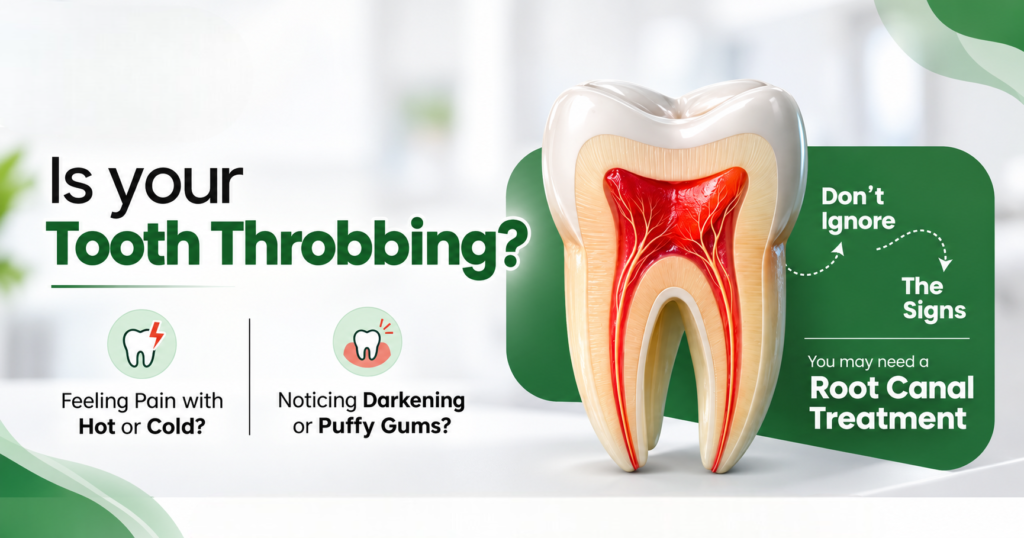
Ask ten people what they dread most at the dentist, and most will say the same thing: a root canal. The phrase alone makes people clench their jaw. But if you’re sitting at home with a throbbing tooth wondering, is a root canal painful? — the honest answer is far more reassuring than the reputation suggests. In this guide, we’ll walk through what patients really experience before, during and after treatment, why the fear exists, and how modern dentistry makes a painless root canal the norm rather than the exception. Is a Root Canal Painful? The Short Answer For most patients, the root canal procedure itself feels similar to getting a routine filling. The tooth is numbed thoroughly with local anaesthesia, so you feel pressure and vibration, but not sharp pain. The real pain usually comes from the problem that makes the treatment necessary in the first place. A badly damaged or infected tooth can ache, throb and react to hot and cold long before you ever sit in the dental chair. Many patients say the treatment relieved their pain rather than causing it. Why Do Root Canals Have Such a Bad Reputation? The fear is real, but it’s mostly outdated. A few reasons it lingers: Today, with better numbing methods, precise instruments and gentler techniques, treatment is far more comfortable than most people expect. What Root Canal Pain Feels Like Before Treatment Understanding root canal pain starts with knowing why you might need one. The soft tissue inside your tooth (the pulp) can become inflamed or infected due to deep decay, a crack, repeated dental work or an injury. Common signs include: If you recognise these symptoms, it’s best not to wait. Early treatment is simpler, quicker and more comfortable. If you’re unsure whether you need a root canal or an extraction, our guide on root canal vs tooth extraction can help you understand the difference. What You’ll Feel During the Root Canal Procedure Here’s a step-by-step look at the root canal procedure, and what each stage feels like. 1. Examination and X-ray. Your dentist checks the tooth and takes an X-ray to see the shape of the roots and the extent of damage. No discomfort here. 2. Local anaesthesia. The area is numbed, usually with a small injection after a numbing gel is applied. You may feel a brief pinch, which fades in seconds. Once the tooth is numb, you shouldn’t feel sharp pain for the rest of the visit. 3. Isolating the tooth. A thin protective sheet keeps the tooth clean and dry. It’s strange but not painful. 4. Cleaning the canals. Your dentist makes a small opening, removes the inflamed or infected pulp, and cleans and shapes the canals. You’ll hear some buzzing and feel mild pressure or vibration, nothing sharp. 5. Filling and sealing. The cleaned canals are filled and sealed to protect the tooth from further infection. 6. Temporary or permanent restoration. The tooth is sealed, and usually a crown is planned afterwards to restore strength and shape. Most visits take around 60 to 90 minutes, though complex cases may need more than one sitting. Tip: If at any point you feel discomfort, raise your hand. A good dentist will pause and top up the anaesthesia straight away. What Makes a Root Canal Painless? A painless root canal isn’t a marketing line; it’s the result of several things working together: Root Canal Recovery: What to Expect After Treatment Once the anaesthesia wears off in a couple of hours, you may notice some soreness. This is normal and part of healing. Typical root canal recovery looks like this: Aftercare Tips for a Smooth Recovery When to Call Your Dentist Contact your dentist promptly if you notice severe pain that doesn’t ease, swelling in the face or gum, a fever, or a bite that feels uneven. These are uncommon but need attention. Root Canal Pain vs Tooth Extraction Pain Some patients choose extraction hoping to avoid a root canal. In reality, extraction brings its own healing period and can lead to gaps that affect chewing, alignment and appearance. Saving your natural tooth is almost always the better long-term option, since nothing replaces a natural tooth quite like itself. If a tooth can’t be saved, replacement choices like dental implants in Mohali can restore function and appearance. What Happens If You Delay a Root Canal? Ignoring the warning signs rarely makes them go away. A tooth that stops hurting suddenly may not be healing; sometimes the nerve inside has simply stopped responding. Delay can lead to: The earlier you act, the simpler and gentler treatment tends to be. Getting Root Canal Treatment in Mohali If you’re looking for root canal Mohali options, choose a clinic that prioritises comfort, explains every step, and uses modern techniques and proper sterilisation. At TrueSmilez, our team focuses on making treatment calm, precise and as comfortable as possible, so you can walk out relieved instead of rattled. You can learn more about our full range of care on our expert dental solutions in Mohali page. Frequently Asked Questions Is a root canal more painful than a filling? Not usually. With proper anaesthesia, most patients describe it as comparable to a filling, just longer. How long does root canal pain last afterwards? Mild soreness typically settles within a few days. Pain that worsens or lingers should be checked. Can I go to work after a root canal? Most people can resume normal activities the same day or the next, avoiding hard foods on the treated side. Do I really need a crown after a root canal? In many cases, yes. A crown protects the treated tooth from cracking and restores normal chewing. Your dentist will advise based on the tooth. Can a root canal fail? Success rates are high, but like any treatment, outcomes depend on the tooth, the quality of the procedure and aftercare. Regular check-ups help catch issues early. Final Thoughts So, is a root canal painful? For the vast
Wisdom Tooth Removal: Pain, Recovery Time & Aftercare Tips
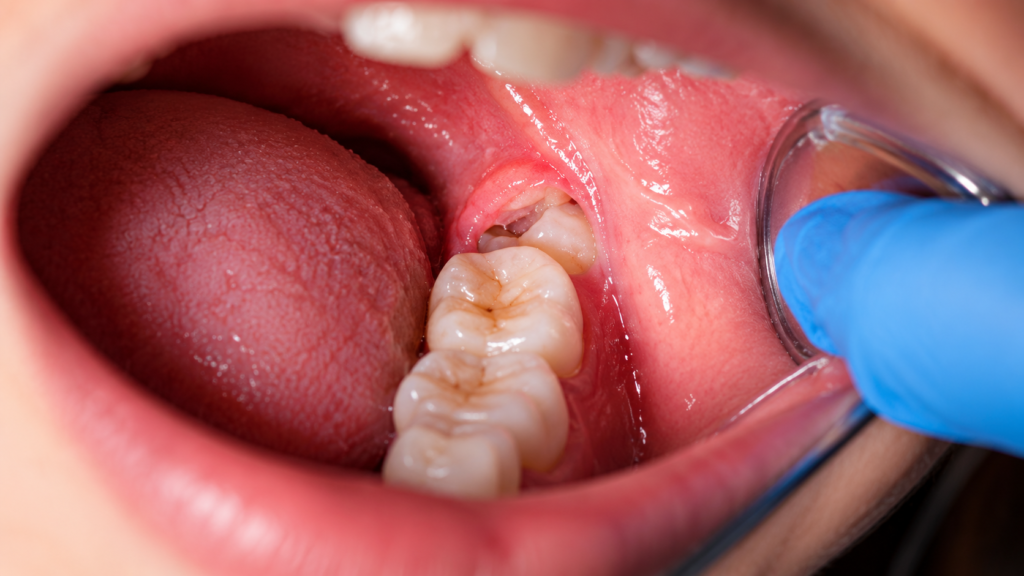
If you have a dull ache at the back of your jaw, swollen gums or trouble opening your mouth fully, your wisdom teeth may be the reason. Many people are nervous about wisdom tooth removal, mostly because of worries about pain and recovery. The good news is that with modern techniques and the right aftercare, it is a routine procedure that most people recover from comfortably. This guide explains why wisdom teeth cause problems, what the procedure involves, how long recovery takes, and how to look after yourself afterwards. What Are Wisdom Teeth? Wisdom teeth are the third set of molars, usually appearing between the ages of 17 and 25 at the very back of your mouth. Most people have four, one in each corner, though some have fewer and some have none at all. The problem is space. Many jaws are not big enough to fit them, so they can come in at an angle, only partly emerge, or stay stuck beneath the gum. Common Signs of Wisdom Tooth Pain Wisdom tooth pain often comes and goes at first, then becomes more frequent. Watch for: These signs do not always mean the tooth must come out, but they are a good reason to get it checked. What Is an Impacted Wisdom Tooth? An impacted wisdom tooth is one that cannot fully emerge through the gum because it is blocked by the neighbouring tooth or the jawbone. It may be tilted forward, tilted backward, lying sideways or trapped completely under the gum. Impacted teeth are harder to clean, which can lead to repeated infection, gum swelling and damage to the tooth in front. An X-ray helps your dentist see exactly how the tooth is positioned and plan the safest approach. When Does a Wisdom Tooth Need to Be Removed? Not every wisdom tooth needs to go. Your dentist may recommend removal if the tooth is: If a wisdom tooth is healthy, properly positioned and easy to keep clean, your dentist may simply monitor it. The Wisdom Tooth Removal Procedure Here is what typically happens, step by step: A simple extraction can take a short while, while impacted teeth may take longer. Your dentist will tell you what to expect in your case. Is Wisdom Tooth Removal Painful? During the procedure, you should feel pressure but not pain, because the area is numb. Afterwards, some soreness, swelling and tenderness are normal as the anaesthesia wears off, and these are usually manageable with the medicines your dentist prescribes. Discomfort tends to be worst in the first couple of days and then improves steadily. Wisdom Tooth Recovery: What to Expect Wisdom tooth recovery varies from person to person, but a general timeline looks like this: Time after surgery What to expect First 24 hours Some bleeding or oozing, numbness fading, mild to moderate soreness Days 2 to 3 Swelling and tenderness often peak, then begin to settle Days 4 to 7 Pain and swelling reduce noticeably, eating becomes easier 1 to 2 weeks Most people feel back to normal; stitches, if any, are removed or dissolve A few weeks The gum continues healing and the socket fills in gradually Simple extractions often heal faster than impacted ones. Most people can return to light daily activities within a few days, but your dentist will advise based on your case. Aftercare Tips for a Smooth Recovery What you do in the first few days makes a big difference. Do: Avoid: What Is Dry Socket and How Can You Avoid It? A blood clot forms in the socket after extraction and protects the healing area. If it is dislodged too early, the bone underneath can become exposed, causing a painful condition called dry socket. It usually shows up a few days after the procedure as increasing pain rather than easing pain. You can lower the risk by avoiding straws, smoking and vigorous rinsing, and by following your dentist’s instructions. If your pain gets worse instead of better after a few days, contact your dentist so it can be treated. When to Call Your Dentist Contact your dentist if you notice: Difficulty breathing or swallowing needs urgent attention. Wisdom Tooth Extraction Cost The wisdom tooth extraction cost depends on several factors rather than a single fixed figure: Simple extractions generally cost less than surgical removal of impacted teeth. The most reliable way to know your cost is a consultation with an X-ray, after which your dentist can give a clear, itemised estimate. Why Choose Professional Care for Wisdom Tooth Surgery in Mohali? Wisdom tooth surgery sits close to important structures in the jaw, so careful planning matters. Choosing an experienced dentist means a proper X-ray assessment, a clear explanation of your options, sterile technique and detailed aftercare guidance. If you are looking for wisdom tooth surgery in Mohali, ask about the clinic’s approach to pain control, how they handle impacted teeth and what follow-up support you will get. To see the other treatments we offer, visit our overview of expert dental solutions in Mohali. If a tooth cannot be saved or has been lost, dental implants in Mohali can be one way to restore your smile later. Frequently Asked Questions Is wisdom tooth removal painful? The area is numbed, so you should not feel pain during the procedure. Some soreness and swelling afterwards is normal and usually settles within a few days with proper care. How long does wisdom tooth recovery take? Most people feel much better within a week and fully comfortable within one to two weeks, though complex or impacted cases may take longer. Do all wisdom teeth need to be removed? No. Only teeth that are causing problems, or are likely to cause problems, usually need removal. Healthy, well-positioned teeth can often be left alone. Can I go to work after wisdom tooth removal? Many people return to light work within a day or two, but it depends on your case and how you feel. Your dentist will guide you. What can I
Dental Veneers in Mohali: Cost, Types & Before-After Results
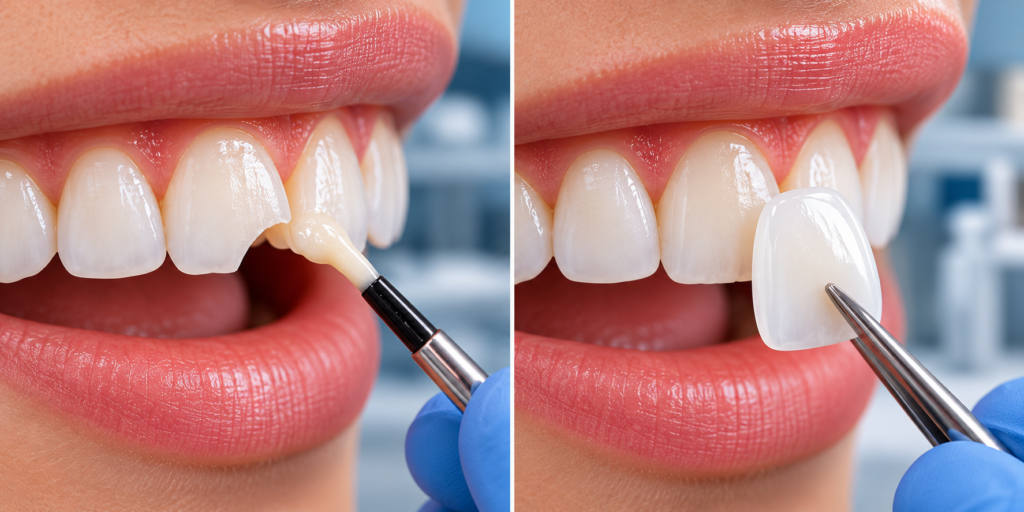
A confident smile can change how you feel in photos, meetings and everyday conversations. If you have stained, chipped, uneven or gapped teeth that whitening alone cannot fix, dental veneers in Mohali can be a transformative option. They reshape the look of your teeth in just a few visits, without the long timelines of other treatments. This guide explains what veneers are, the different types, what veneers cost, how they compare with crowns, and what kind of before and after results you can realistically expect. What Are Dental Veneers? Dental veneers are thin, custom-made shells that are bonded to the front surface of your teeth. They are designed to match the shape, size and shade you and your dentist plan together, so the finished result looks natural and balanced with your face. Veneers are a core part of smile designing, where your dentist plans the overall look of your smile, not just individual teeth. If you would like an overview of how this works, see our page on veneers and smile designing in Mohali. What Can Veneers Fix? Veneers are commonly used to improve: They are a cosmetic treatment, so your dentist will first check that your teeth and gums are healthy before recommending them. Types of Dental Veneers There are two main types, and the right one depends on your goals, budget and how long you want the result to last. Porcelain Veneers Porcelain veneers are made in a dental lab from ceramic material. They are known for their natural, light-reflecting finish and resistance to staining, which is why many people consider them the premium choice. They are typically made over more than one visit and are designed to last for many years with good care. Composite Veneers Composite veneers are built directly on your teeth using tooth-coloured resin. They are usually completed in a single visit and cost less than porcelain. They can be repaired easily if chipped, but they may stain or wear sooner than porcelain. Quick Comparison Factor Porcelain veneers Composite veneers Appearance Very natural, high-gloss finish Natural, slightly less lustre Stain resistance High Moderate Visits needed Usually more than one Often one Durability Longer-lasting Shorter-lasting Repairability Replacement may be needed Easy to repair Cost Higher Lower Veneers Cost in Mohali The veneers cost depends on the material, the number of teeth, and the complexity of your smile design. In general, the pricing works like this: Most people treat the front 6 to 10 teeth that show when they smile, so the total depends on how many teeth are included in your plan. Your exact veneers cost is confirmed after an examination and smile design consultation. When comparing quotes, ask what is included: the digital smile preview, the material used, follow-up visits and any adjustments after fitting. Veneers vs Crowns: What Is the Difference? People often confuse the two, but they serve different purposes. Factor Veneers Crowns Coverage Front surface of the tooth only Covers the entire tooth Tooth preparation Minimal More tooth is reshaped Main purpose Cosmetic improvement Strengthening and protecting a damaged tooth Best for Stains, gaps, shape, minor chips Heavily damaged or weakened teeth In short, veneers vs crowns comes down to purpose. Veneers improve appearance with less tooth reduction, while crowns protect teeth that have lost a lot of structure. Your dentist will recommend whichever suits the condition of each tooth. The Veneers Process: Step by Step Veneers Before and After: What Results Can You Expect? The most exciting part of the process is seeing the transformation. A typical veneers before and after comparison shows: Results vary from person to person, and the best outcomes come from careful planning and realistic expectations. A good dentist will show you a preview of the expected result before you commit, so you know what to expect. [Add TrueSmilez before-and-after photos here, with patient consent. Suggested alt text: “veneers before and after results at TrueSmilez Mohali”.] How Long Do Veneers Last? With good care, porcelain veneers can last many years, and composite veneers a shorter period. Lifespan depends on your oral hygiene, habits such as nail biting or grinding, and regular check-ups. Caring for Your Veneers Is Veneers Treatment Right for You? Veneers may be a great fit if you have healthy teeth and gums and want a cosmetic improvement in a short time. They may not be the best choice if you have untreated dental problems, heavy grinding habits, or teeth that need straightening or structural repair first. In those cases, your dentist may suggest options such as clear aligners before veneers, or dental implants to replace missing teeth. To see how different treatments can work together in one plan, explore our expert dental solutions in Mohali. Frequently Asked Questions How much do dental veneers cost in Mohali? Costs depend on the type of veneer and the number of teeth. Composite veneers cost less, while porcelain veneers cost more but last longer. A personalised quote is given after a consultation. Are veneers permanent? Veneers are long-lasting but not permanent in the sense that they may eventually need replacement. Because a thin layer of enamel is usually reshaped, the treatment is generally considered irreversible. Do veneers hurt? The procedure is usually comfortable, and local anaesthesia can be used if needed. You may notice some sensitivity for a short time afterwards. How long does the veneers procedure take? Composite veneers are often done in one visit, while porcelain veneers usually take two or more visits over a couple of weeks. Can veneers stain? Porcelain veneers resist stains very well. Composite veneers can stain over time, so good habits and regular cleanings help. Are veneers better than whitening? They solve different problems. Whitening brightens natural teeth, while veneers also change shape, size and alignment. Your dentist can advise which suits your goals. Can I eat normally with veneers? Yes, you can eat normally, though it is wise to avoid biting very hard foods directly with your front teeth. Final Thoughts Dental veneers can give you a brighter,
Braces vs Invisalign: Which One Is Right for Your Smile?
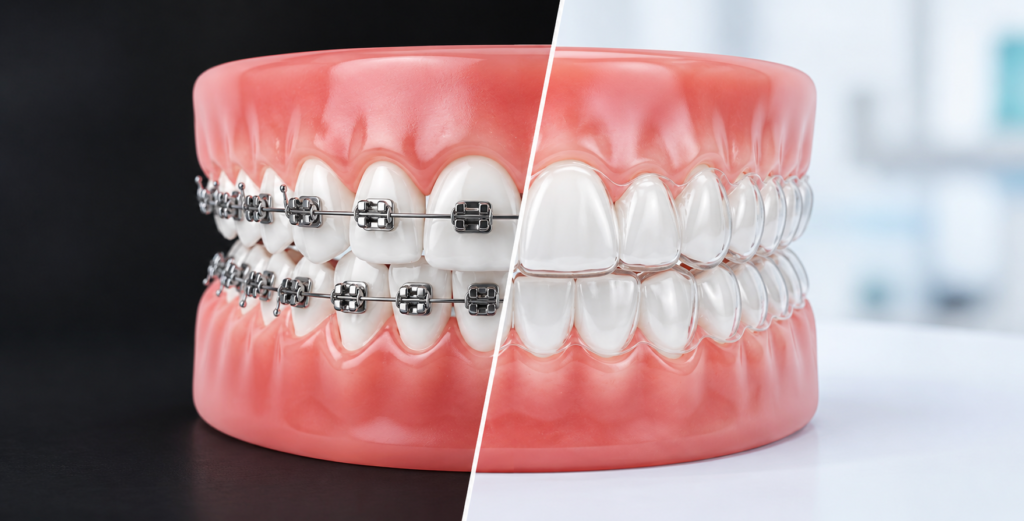
If you are thinking about straightening your teeth, you have probably landed on the big question: braces vs Invisalign, which one should you choose? Both can give you a beautifully aligned smile. They just get there in very different ways, and the right choice depends on your teeth, your lifestyle and your budget. This guide compares the two side by side so you can make a confident decision. What Are Traditional Braces? Traditional braces use small brackets bonded to the front of your teeth, joined by an archwire that applies gentle, steady pressure. Your dentist or orthodontist adjusts the wire at regular visits to guide your teeth into position. There are a few types: Because braces are fixed in place, they work around the clock without any effort from you. What Is Invisalign? Invisalign is a clear aligner system, often called invisible braces. It uses a series of custom-made, transparent plastic trays that you swap every one to two weeks. Each tray moves your teeth a small step towards the planned final position, which is mapped out digitally before you begin. The aligners are removable, so you take them out to eat, drink and clean your teeth. For a closer look at the treatment itself, see our page on Invisalign and clear aligners in Mohali. Braces vs Invisalign: Side-by-Side Comparison Factor Metal braces Invisalign (clear aligners) Appearance Visible brackets and wire Nearly invisible Removable No Yes Eating Some foods to avoid Remove before eating, no food limits Cleaning Needs extra care around brackets Brush and floss normally Comfort Wires can irritate cheeks and lips Smooth plastic, fewer sore spots Clinic visits Regular adjustment visits Fewer visits, new trays at home Discipline needed Low, always on High, 20–22 hours of wear daily Typical cost Lower Higher Best for Complex cases, anyone who prefers a hands-off option Mild to moderate cases, image-conscious adults Cost: Metal Braces vs Clear Aligners Cost is often the deciding factor, so here is a realistic picture. Metal braces cost in India generally falls in the range of about ₹25,000 to ₹60,000, depending on the case and clinic. Ceramic braces cost more than metal, and lingual braces cost more again. Clear aligners cost is higher. Invisalign treatment commonly ranges from roughly ₹2,00,000 to ₹4,50,000 depending on complexity, while some other aligner brands are priced lower. You can read a full breakdown in our guide to the Invisalign cost in Mohali. These are indicative ranges, not fixed quotes. Your exact price is confirmed after an examination. When comparing quotes, ask what is included: number of aligners or adjustment visits, refinements, retainers and follow-ups. Treatment Time: Which Is Faster? There is no universal winner. Most cases with either option take roughly 6 to 24 months, depending on how much your teeth need to move. Braces can be faster for complex corrections because they are always working. Invisalign can be just as quick for mild to moderate cases, provided you wear the aligners 20 to 22 hours a day. The real difference is consistency. Braces cannot be skipped. Aligners can, and skipping them is the most common reason Invisalign takes longer than planned. Looks and Comfort If appearance matters to you, Invisalign has a clear edge. Most people will not notice you are wearing them, which is a big reason professionals, brides and grooms-to-be, and college students choose clear aligners. On comfort, aligners are smooth and free of wires and brackets, so there are fewer rubbing spots. Both options can feel tight for a couple of days after a new adjustment or tray, which is normal. Eating, Cleaning and Daily Life With braces, you will need to avoid very hard, sticky and chewy foods, and cleaning takes more time because food can catch around brackets. Special brushes and floss threaders help. With Invisalign, you simply remove the trays to eat and drink anything other than water, then brush and put them back in. This makes daily life easier, but it also means you must remember to put them back in, and to clean them every day. Adult Braces: Is It Too Late? Not at all. Adult braces and aligners are more popular than ever. Healthy teeth and gums can be moved at almost any age, and many adults choose treatment to improve their smile, bite and confidence. Adults often lean towards Invisalign or ceramic braces because they are more discreet, but metal braces remain a reliable, budget-friendly choice for adults too. Which Is Right for You? Invisalign may suit you if: Braces may suit you if: The best teeth straightening option is the one that fits your teeth and your life. A clinical examination and digital scan will tell your dentist which route will give you the best result. Beyond Straightening: Completing Your Smile Alignment is often the first step. Once your teeth are in position, treatments such as veneers and smile designing in Mohali can refine shape and shade, and our overview of expert dental solutions in Mohali explains how different treatments can be combined into a single plan. Frequently Asked Questions Which is better, braces or Invisalign? Neither is better for everyone. Invisalign offers discretion and convenience, while braces handle complex cases well and cost less. The right choice depends on your teeth and lifestyle. Is Invisalign as effective as braces? For many mild to moderate cases, yes. For more complex corrections, braces may offer better control. Your dentist can advise after an examination. Is Invisalign more expensive than braces? In most cases, yes. Clear aligners generally cost more than metal braces because of the custom trays and digital planning involved. Are invisible braces painful? You may feel mild pressure for a day or two with each new tray. Most people find it comfortable overall. Can adults get braces or Invisalign? Yes. Adults of all ages can be treated as long as their teeth and gums are healthy. How long do I need to wear a retainer? Retainers are essential after both treatments to keep your teeth in
Invisalign Cost in Mohali: Price, Duration & Is It Worth It?
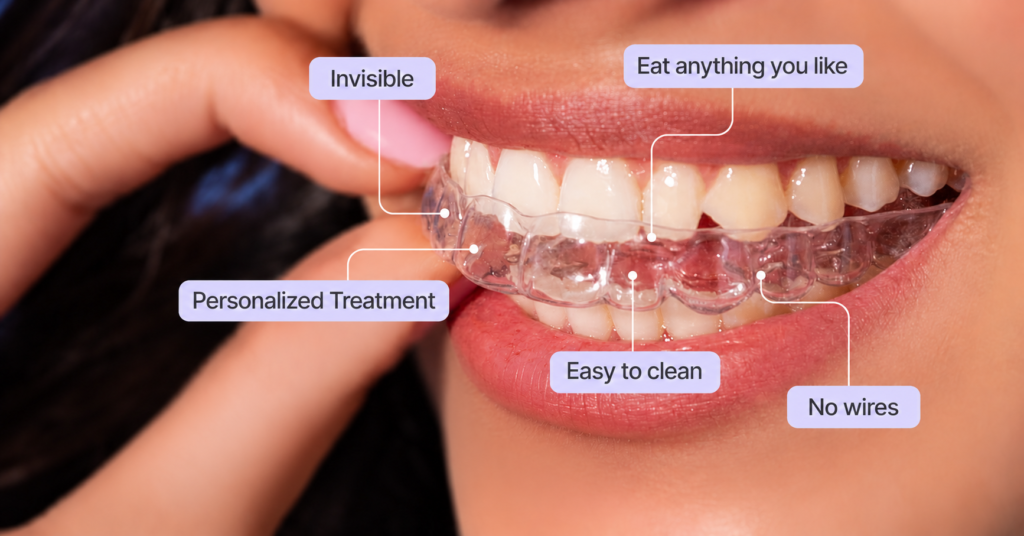
Straighter teeth no longer have to mean a mouth full of metal. Clear aligners have become one of the most popular ways for working professionals, college students and even parents to fix crooked or gapped teeth discreetly. But the first question almost everyone asks is the same: what is the Invisalign cost in Mohali, and is it really worth it? This guide breaks down typical Invisalign price ranges, what decides your final quote, how long treatment takes, how it compares with braces, and how to decide if it suits you. How Much Does Invisalign Cost in Mohali? The Invisalign cost in Mohali usually falls somewhere between ₹2,00,000 and ₹4,50,000, depending on the complexity of your case. Simpler, mild corrections can come in lower, while complex cases that need a longer series of aligners sit at the higher end. A rough guide: Case type What it usually involves Approximate price range Mild Minor crowding or small gaps ₹2,00,000 – ₹2,75,000 Moderate Noticeable crowding, spacing or bite correction ₹2,75,000 – ₹3,75,000 Complex Significant bite issues, longer treatment ₹3,75,000 – ₹4,50,000+ These figures are indicative market ranges, not a fixed quote. Your exact Invisalign price is confirmed only after a clinical examination and digital scan. Why Invisalign Price Differs From Person to Person Two people can walk into the same clinic and get very different quotes. Here is why: When you compare clear aligners cost across clinics, always ask what is included: number of aligners, refinements, follow-up visits and retainers. A lower headline price that leaves out these items can end up costing more. Invisalign vs Other Clear Aligners: Why Prices Vary Not all clear aligners are priced the same. Invisalign is a globally established system known for its digital treatment planning and custom-made trays, which is part of why it sits at a higher price point than many local or economy aligner brands. Cheaper aligners can work for very mild cases, but results depend heavily on proper planning and supervision by a trained dentist. If you are comparing options, ask your dentist which system suits your specific case rather than choosing on price alone. Invisalign Treatment Time: How Long Does It Take? Most people ask about Invisalign treatment time right after cost. As a general idea: Your actual timeline depends on how your teeth respond and, importantly, on wearing your aligners for around 20 to 22 hours a day. Taking them out too often is the most common reason treatment runs longer than planned. You will change to a new set of aligners roughly every one to two weeks, as advised by your dentist, and visit the clinic periodically for progress checks. Invisalign vs Braces: Which Is Better? The Invisalign vs braces debate comes down to lifestyle, comfort and the type of correction needed. Factor Invisalign (clear aligners) Traditional braces Appearance Nearly invisible Visible metal or ceramic brackets Removable Yes, for eating and cleaning No, fixed in place Food restrictions Minimal (remove before eating) Several foods to avoid Cleaning Easy to brush and floss normally Needs extra care around brackets Comfort Smooth plastic, fewer sore spots Wires can irritate cheeks and lips Discipline needed High (must wear 20–22 hrs/day) Low (always on) Cost Generally higher Generally lower Best for Mild to moderate cases, image-conscious adults Complex cases, or those who may not wear aligners consistently Bottom line: Invisalign offers comfort and discretion, while braces can be a more budget-friendly and hands-off option. Your dentist can tell you which one is clinically right for you after an assessment. Invisalign in Chandigarh vs Mohali: Is There a Price Difference? Many patients search for Invisalign Chandigarh and Mohali options side by side, since the two cities are practically one urban region. Prices are broadly similar across the tricity, though they vary clinic to clinic based on the dentist’s expertise, technology and what the package includes. Mohali clinics often offer easier parking, shorter waiting times and comfortable access for people living in Mohali, Zirakpur, Kharar and nearby areas, which makes regular check-ups far less of a hassle. Pros and Cons of Invisalign Pros Cons Is Invisalign Worth It? For many people, yes. Invisalign tends to be worth the investment if: It may be less suitable if you struggle with consistency, or if your case needs a type of correction that fixed braces handle better. The best approach is an honest consultation where your dentist shows you the scan, the planned movement and the expected timeline before you commit. Can Invisalign Be Combined With Other Smile Treatments? Yes. Many patients straighten their teeth first and then enhance their smile further. Once alignment is corrected, treatments such as veneers and smile designing in Mohali can refine shape and shade, and our team can plan the sequence to suit you. If you are exploring a full smile makeover, our overview of expert dental solutions in Mohali shows how different treatments work together. Missing teeth can also be addressed with dental implants in Mohali as part of an overall plan. Tips to Get the Best Value From Your Invisalign Treatment Frequently Asked Questions What is the average Invisalign cost in Mohali? The typical Invisalign cost in Mohali ranges from about ₹2,00,000 to ₹4,50,000, depending on case complexity. A personalised quote is given after a consultation and scan. Is Invisalign more expensive than braces? In most cases, yes. Invisalign usually costs more than traditional metal braces because of the technology, custom aligners and digital planning involved. Many people feel the discretion and comfort justify the difference. How long does Invisalign take to work? Most cases take between 6 and 24 months. Mild cases can finish in under a year, while more complex cases take longer. Consistent daily wear is the biggest factor. Is Invisalign painful? You may feel mild pressure or tightness for a day or two when you switch to a new aligner. This is normal and usually settles quickly. Most people find it more comfortable than fixed braces. Can adults get Invisalign? Absolutely. Invisalign is very popular among
10 Signs You Need to Visit a Dentist — Don’t Ignore These Dental Problems
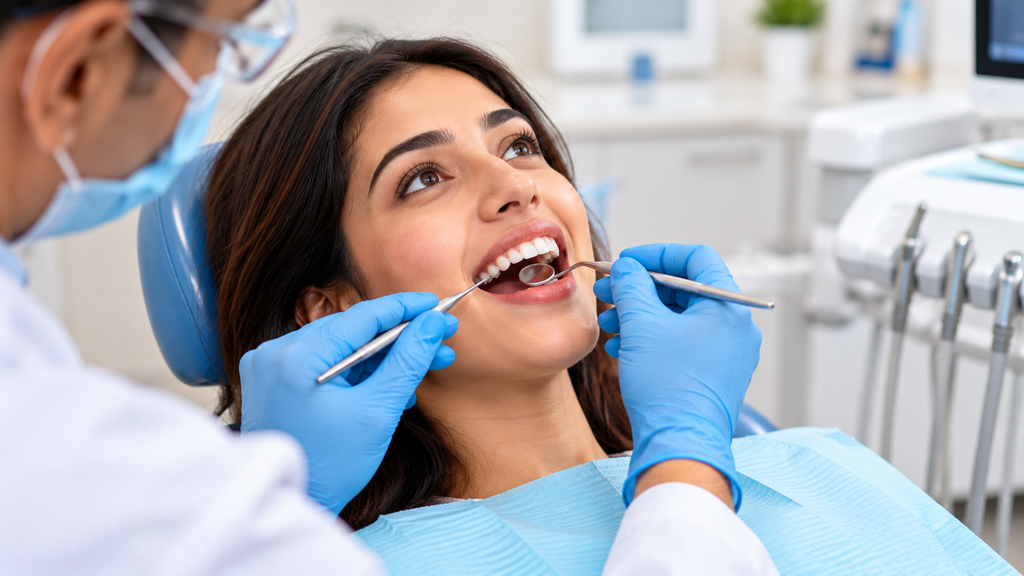
It’s easy to put off a dental visit when nothing feels urgent. But many dental problems start small and quiet, showing subtle signs long before they turn into pain or a bigger procedure. Knowing what to watch for can save you time, money and discomfort down the line. Here are 10 signs you need to see a dentist — don’t wait until they get worse. 1. Persistent Tooth Pain Occasional mild sensitivity is common, but tooth pain that lingers, throbs or worsens when you bite down is your body signalling that something needs attention. This could indicate decay, an infection, or a cracked tooth. Ignoring persistent pain often means the problem — and the treatment needed — gets bigger over time. 2. Bleeding Gums Gums that bleed when you brush or floss are one of the earliest signs of tooth decay and gum disease, even though the bleeding itself comes from the gums, not the teeth. Occasional bleeding from brushing too hard is one thing, but regular bleeding usually points to gum inflammation (gingivitis) that needs professional cleaning before it progresses further. 3. Sensitive Teeth If hot, cold, sweet or acidic foods and drinks cause a sharp, uncomfortable reaction, you have sensitive teeth that need looking at. This can result from worn enamel, gum recession, a cavity, or even a cracked tooth. A dentist can identify the exact cause and recommend the right fix, from desensitising treatments to a filling. 4. Swollen or Tender Gums Swollen gums — especially if they look red, feel tender to touch, or appear puffy around specific teeth — often signal an infection or advancing gum disease. Left unaddressed, this can progress to more serious periodontal issues that affect the bone supporting your teeth. 5. Persistent Bad Breath Bad breath that doesn’t go away with brushing, mouthwash or mints can be a sign of gum disease, tooth decay, or bacteria trapped in areas your toothbrush can’t reach. A professional cleaning and check-up can identify the underlying cause rather than just masking the smell. 6. Visible Cavities or Dark Spots Dark spots, small holes, or visible discolouration on a tooth’s surface are classic cavity symptoms. Cavities don’t heal on their own and only get larger and deeper the longer they’re left, eventually reaching the nerve and requiring more extensive treatment. 7. A Tooth That’s Suddenly Stopped Hurting This one catches people off guard. If a tooth was painful and then the pain suddenly disappears, it doesn’t always mean it healed — it can mean the nerve inside has died. This is actually one of the clearer signs you need a root canal, and it still requires treatment even though the pain is gone. 8. Loose or Shifting Teeth Adult teeth shouldn’t feel loose or move from their position. This can indicate advanced gum disease, bone loss, or trauma to the tooth. The sooner this is evaluated, the better the chances of saving the tooth. If a tooth has already been lost, options like dental implants can restore full function. 9. Jaw Pain or Clicking Pain in the jaw, difficulty opening your mouth fully, or a clicking/popping sound when chewing can point to issues like teeth grinding, misalignment, or a jaw joint (TMJ) problem. A dentist can assess whether the cause is dental, structural, or habit-related. 10. It’s Been Over 6 Months Since Your Last Dental Checkup Even without any obvious symptoms, skipping your routine dental checkup means small issues can go undetected until they become bigger problems. Regular check-ups every 6 months allow your dentist to catch decay, gum issues or wear early, when treatment is simpler and less costly. Why Early Action Matters Most dental problems are far easier, faster and cheaper to treat when caught early. A small cavity needs a simple filling; left untreated, it can progress to needing a root canal or even extraction. Waiting rarely makes a dental issue go away — it usually just adds more steps to the fix. What Happens During a Dental Check-Up If you’re overdue for a visit, here’s what a routine check-up typically involves: For a full picture of what a clinic can address in one visit, see our expert dental solutions in Mohali. Frequently Asked Questions 1. What are the earliest signs of tooth decay?Sensitivity to hot, cold or sweet foods, visible dark spots, and mild discomfort while chewing are often the earliest signs, before pain becomes noticeable. 2. Is bleeding while brushing always a sign of a problem?Occasional light bleeding from brushing too hard can happen, but regular or frequent bleeding usually indicates gum inflammation that needs professional attention. 3. Why did my tooth pain suddenly stop?Sudden relief from tooth pain can mean the nerve inside the tooth has died, which still requires treatment like a root canal — it isn’t a sign of healing. 4. How often should I visit the dentist if I have no symptoms?Every 6 months is generally recommended, even without symptoms, since many dental issues develop silently. 5. Can jaw clicking mean something serious?Not always, but persistent clicking, pain or difficulty opening your mouth should be evaluated to rule out TMJ disorders or bite misalignment. 6. What should I do if I notice a loose adult tooth?See a dentist as soon as possible. Early evaluation gives the best chance of treating the underlying cause and potentially saving the tooth. 7. Can bad breath be fixed with just mouthwash?Mouthwash can mask odour temporarily, but if bad breath persists, it usually points to an underlying issue like gum disease or decay that needs professional treatment. Final Thoughts Your mouth often gives warning signs long before a dental problem becomes serious. Tooth pain, bleeding gums, sensitivity, swelling or a sudden change in symptoms are all cues worth listening to. When in doubt, a simple check-up can catch issues early and save you from more complex treatment later. Noticing any of these signs? Book a dental check-up today and get ahead of the problem before it grows.
How Long Does Teeth Whitening Last? Results, Maintenance & What to Expect
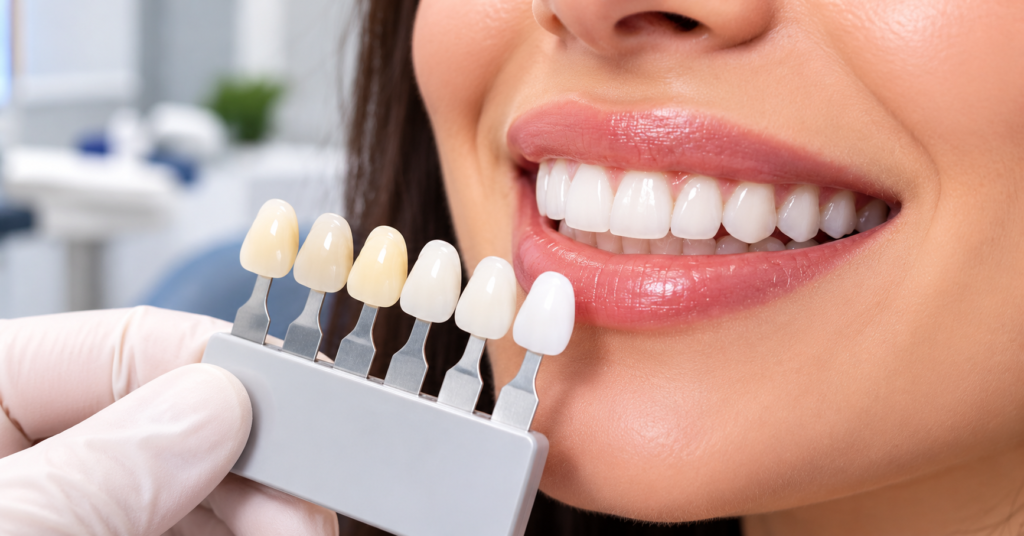
You’ve had your teeth whitened and your smile looks noticeably brighter — but how long will it actually stay that way? The honest answer depends on the method used, your lifestyle habits, and how well you maintain your results afterward. This guide covers how long does teeth whitening last, what affects the results, and how to make your bright smile last longer. How Long Does Teeth Whitening Last? On average, professional teeth whitening results last anywhere from 6 months to 2–3 years, depending on the treatment method and how you care for your teeth afterward. In-clinic whitening tends to give more dramatic, longer-lasting results compared to at-home kits, but no whitening treatment is permanent — staining gradually returns as you eat, drink and age. What Affects How Long Your Results Last 1. Whitening Method Used 2. Diet and Lifestyle Habits Foods and drinks that stain teeth will shorten how long whitening lasts. Common culprits include: 3. Oral Hygiene Routine Regular brushing, flossing and periodic professional cleaning help slow down new staining and preserve your whitening results for longer. 4. Natural Tooth Porosity Everyone’s enamel is slightly different. Some people’s teeth are naturally more porous and pick up stains faster, meaning they may need touch-ups sooner than others. 5. Age Enamel thins naturally with age, revealing more of the yellowish dentin underneath, which can make whitening results fade a bit faster over time. Professional Teeth Whitening vs At-Home Whitening Factor Professional Whitening At-Home Kits Speed of results Faster, often in one sitting Gradual, over days to weeks Strength Higher-strength, dentist-supervised Milder concentration Longevity Longer-lasting Shorter-lasting, needs frequent touch-ups Safety Supervised for enamel and gum safety Risk of sensitivity if misused Cost Higher upfront Lower upfront, but repeat purchases add up How to Whiten Teeth the Right Way If you’re wondering how to whiten teeth effectively and safely, here’s the general process for professional whitening: Skipping the cleaning step or attempting strong bleaching agents without supervision can lead to uneven results or sensitivity. Teeth Whitening Before and After: What Changes to Expect Most patients notice a visible shade improvement, often several shades lighter, immediately after an in-clinic session. Teeth whitening before and after comparisons typically show the biggest difference right after treatment, with results gradually settling over the following days as any temporary dehydration of the tooth (which can make it look slightly whiter initially) evens out. Results vary by starting shade and the cause of discolouration — surface stains from food and drink respond better than deep, medication-related staining. How to Make Your Whitening Results Last Longer Teeth Whitening Cost and Value Over Time Teeth whitening cost varies depending on whether you choose in-clinic treatment, custom trays or over-the-counter products. While in-clinic whitening has a higher upfront cost, it often works out better value over time due to longer-lasting, more even results and professional supervision. At-home and OTC options are cheaper per use but may need to be repeated more often to maintain the same brightness. Is Teeth Whitening Safe for Everyone? Whitening is generally safe when done under professional guidance, but it isn’t ideal for everyone. Your dentist may recommend addressing other concerns first if you have: A dental check-up before whitening ensures the treatment is both safe and effective for your specific case. If your smile concerns go beyond just shade, it’s also worth exploring veneers and smile designing as a longer-term option. Frequently Asked Questions 1. How long does teeth whitening last on average?Most results last between 6 months and 2–3 years, depending on the method used and how well you maintain your results afterward. 2. Does professional teeth whitening last longer than at-home kits?Yes, generally. Professional whitening uses stronger, supervised treatments that tend to produce more even and longer-lasting results compared to over-the-counter options. 3. Can I make my teeth whitening results last longer?Yes — avoiding staining foods and drinks, maintaining good oral hygiene, and getting regular professional cleanings all help extend your results. 4. Why do my teeth whiten and then get yellow again quickly?This is usually due to diet (coffee, tea, tobacco), natural tooth porosity, or skipping post-whitening care guidelines like the “white diet” in the first 48 hours. 5. Is it normal for teeth to look slightly different a few days after whitening?Yes. Results can look extremely bright immediately after treatment due to temporary dehydration of the tooth, then settle to a slightly more natural (but still brighter) shade over the following days. 6. How much does professional teeth whitening cost?Cost varies by clinic and method used. It’s best to get a consultation for an accurate quote based on your specific case. 7. Can whitening damage my teeth?When done under professional supervision, whitening is safe for most people. Overuse of unsupervised products or ignoring existing dental issues can cause sensitivity or uneven results. Final Thoughts How long does teeth whitening last ultimately comes down to the method you choose and how you care for your teeth afterward. Professional treatments tend to last longer and look more natural, especially when paired with good oral hygiene and mindful eating habits. For the best and longest-lasting results, always start with a proper consultation and, if needed, a cleaning beforehand. Ready for a brighter smile? Book a professional teeth whitening consultation and get a treatment plan suited to your teeth.
Teeth Cleaning vs Teeth Whitening: What Is the Difference and Which One Do You Need?
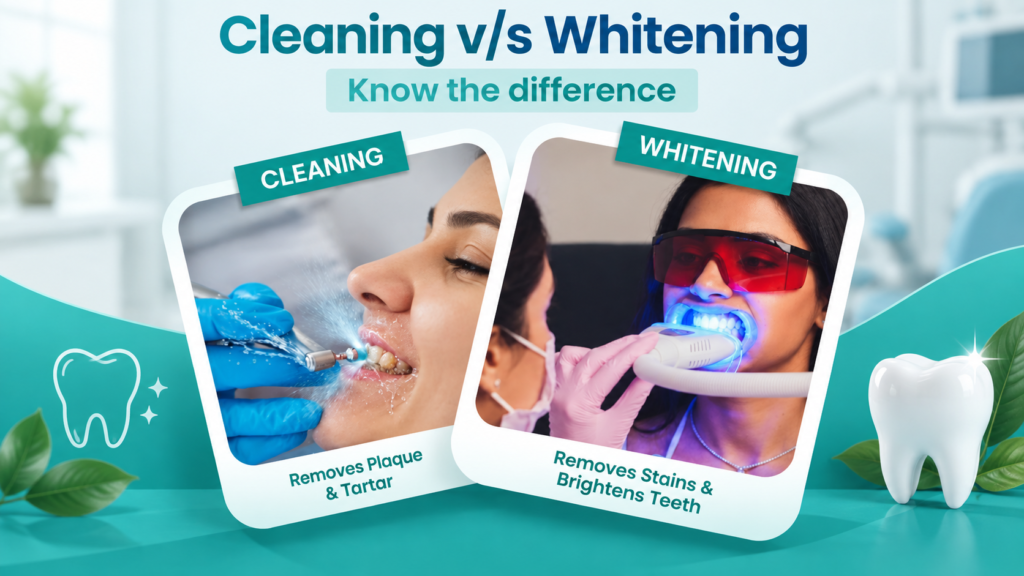
Yellow teeth and dull-looking smiles often get treated as the same problem, but the fix isn’t always the same. Some people need teeth cleaning, others need teeth whitening, and many need both. Confusing the two can mean spending on a treatment that doesn’t actually solve your concern. This guide explains teeth cleaning vs teeth whitening — what each does, how they differ, and how to know which one you actually need. What Is Teeth Cleaning? Professional teeth cleaning, also called scaling and polishing, is a dental procedure that removes plaque, tartar and surface debris that regular brushing can’t reach. It’s a routine part of oral hygiene maintenance, not a cosmetic treatment. During the procedure: The primary purpose of teeth cleaning is oral health, not appearance. It helps prevent gum disease, cavities and bad breath, though it does leave teeth looking noticeably fresher. It’s also a good time to get a general check-up if you’re due for one — see our expert dental solutions in Mohali for the full range of services we cover. What Is Teeth Whitening? Teeth whitening is a cosmetic treatment aimed specifically at making teeth appear brighter and lighter in shade. Unlike cleaning, it doesn’t remove plaque or tartar — it works by breaking down stains and discolouration within the tooth enamel using a bleaching agent. Whitening can be done: Teeth whitening addresses deeper discolouration — the kind caused by ageing, tea, coffee, tobacco or certain medications — that cleaning alone cannot fix. If you’re planning a full smile makeover rather than just whitening, it’s worth exploring our veneers and smile designing options as well. Teeth Cleaning vs Teeth Whitening: Key Differences Aspect Teeth Cleaning Teeth Whitening Purpose Oral hygiene and gum health Cosmetic brightening What it removes Plaque, tartar, surface stains Deep-set stains and discolouration Frequency recommended Every 6 months As needed, with maintenance Changes tooth colour Slightly (removes surface stains) Significantly (lightens overall shade) Addresses gum health Yes No Best for Routine maintenance, tartar buildup, bad breath Yellowing, staining from food/drink/tobacco Do You Need Teeth Cleaning or Teeth Whitening? You likely need teeth cleaning if: You likely need teeth whitening if: You may need both if: Why Cleaning Should Come Before Whitening If your teeth have plaque or tartar buildup, whitening gel can’t work evenly across the tooth surface. Getting a professional teeth cleaning first ensures: Most dental clinics will recommend a cleaning as a first step even if you’ve only asked about whitening. Can Teeth Cleaning Remove Yellow Stains? Teeth cleaning can lighten teeth slightly by removing surface stains from food, drinks and plaque, and many patients notice their teeth do look brighter right after a cleaning. However, it cannot change the natural shade of the tooth itself. If your teeth are yellow due to deeper, embedded staining or the natural colour of the enamel, a yellow teeth treatment like professional whitening is needed for a real shade change. How Long Do the Results Last? Teeth cleaning: Results typically last until plaque and tartar build up again, generally around 6 months, depending on your oral hygiene habits and diet. Teeth whitening: Results can last anywhere from several months to a couple of years, depending on your diet, whether you smoke, and how well you maintain the results with good oral hygiene and touch-up treatments. If your teeth alignment is affecting how even your smile looks even after whitening, our Invisalign and clear aligners page covers straightening options too. Are Both Treatments Safe? Yes, when done by a qualified dental professional. Teeth cleaning is a routine, non-invasive procedure suitable for almost everyone. Teeth whitening is also safe when supervised by a dentist, who will assess your enamel condition and any existing sensitivity before recommending a concentration and method suited to you. Over-the-counter whitening products used without guidance can sometimes cause sensitivity or uneven results, which is why a professional consultation is recommended. Frequently Asked Questions 1. Is teeth whitening the same as teeth cleaning?No. Cleaning removes plaque and tartar for oral health, while whitening is a cosmetic treatment that lightens the overall shade of your teeth. 2. Will teeth cleaning make my teeth whiter?It can remove some surface stains and make teeth look fresher, but it won’t change the natural shade of your teeth the way whitening does. 3. How often should I get a professional teeth cleaning?Most dentists recommend a cleaning every 6 months as part of routine oral care. 4. Does teeth whitening damage enamel?When done under professional supervision with the right concentration and duration, whitening is generally safe for enamel. Overuse of unsupervised products can cause sensitivity. 5. Can I whiten my teeth without a cleaning first?It’s possible, but results are usually less even and effective if plaque or tartar is still present. Cleaning first is recommended for the best outcome. 6. How can I remove teeth stains at home?Good brushing habits, limiting staining foods and drinks, and using a dentist-recommended toothpaste can help manage surface stains, but for visible or long-standing stains, professional treatment gives better results. 7. Is scaling and polishing painful?Most patients feel little to no discomfort. Some mild sensitivity is possible, especially if there’s significant tartar buildup or sensitive gums. Final Thoughts Teeth cleaning vs teeth whitening isn’t really an either-or choice — they solve different problems. Cleaning is about oral health and removing what brushing misses; whitening is about cosmetically brightening your smile. If your teeth look dull or stained, start with a cleaning, and add whitening if you still want a noticeably brighter shade. Not sure which one you need? Book a consultation and let your dentist assess your teeth before recommending the right treatment.
Root Canal vs Tooth Extraction: Which Treatment Is Better for a Damaged Tooth?
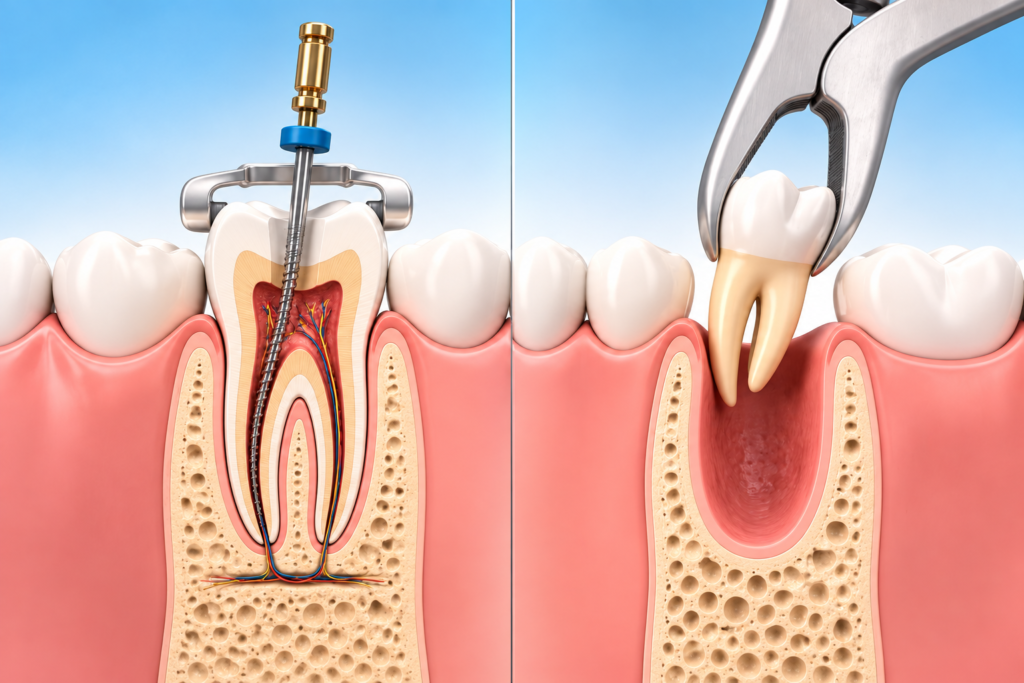
A damaged or infected tooth almost always brings up the same question at the dentist’s chair: should you save it with a root canal, or is it simpler to just get it removed? Both are common, effective treatments, but they solve the problem in very different ways. This guide breaks down root canal vs tooth extraction so you know what to expect from each, when one is preferred over the other, and how to decide with your dentist. What Is a Root Canal? A root canal treatment removes infected or damaged pulp (the soft tissue inside a tooth) while preserving the natural tooth structure. Once the infection is cleared, the space inside is cleaned, shaped, filled and sealed, and a crown is usually placed on top to restore strength and function. The goal is simple: save your natural tooth rather than remove it. What Is a Tooth Extraction? A tooth extraction is the complete removal of a tooth from its socket. It’s typically recommended when a tooth is too damaged, decayed or infected to be saved, or when it’s causing problems like overcrowding or impaction (as with wisdom teeth). After extraction, the gap is usually filled with a replacement option like a dental implant, bridge or denture to maintain proper chewing function and prevent nearby teeth from shifting. Root Canal vs Tooth Extraction: Key Differences Aspect Root Canal Tooth Extraction What happens Infected pulp removed, tooth preserved Entire tooth removed Natural tooth Retained Lost, may need replacement Procedure time One or more longer sittings Usually quicker Recovery Mild soreness for a few days Slightly longer healing at the socket Long-term outcome Functions like a natural tooth with a crown Requires an implant, bridge or denture to restore chewing Cost over time Higher upfront, but often more economical long-term Lower upfront, but replacement adds to total cost Signs You May Need a Root Canal You might need root canal treatment if you notice: If you’re experiencing any tooth pain treatment concerns like these, it’s worth getting examined before deciding between saving or removing the tooth. When Is Extraction the Better Option? Extraction is generally recommended when: Your dentist will usually take an X-ray to assess how much healthy structure remains before recommending either path. Root Canal or Extraction: How Dentists Decide When you ask “should I get a root canal or extraction,” dentists typically weigh: In most cases, dentists prefer to save a natural tooth wherever possible, since nothing fully replicates its function. Extraction is considered when saving the tooth isn’t realistic or would fail again soon after. Root Canal Treatment Cost vs Extraction Cost Root canal treatment cost typically includes the procedure itself plus a crown afterward, since the tooth needs added strength once the pulp is removed. Extraction is usually cheaper as a standalone procedure, but if the missing tooth is replaced with an implant, bridge or denture, the combined cost can end up higher than a root canal. It helps to think of the decision as: root canal cost = treatment + crown, versus extraction cost = removal + eventual replacement (if needed). Ask your dentist for a full breakdown of both paths before deciding. Recovery: What to Expect After a Root Canal After an Extraction Why Saving Your Natural Tooth Usually Matters Whenever it’s a viable option, keeping your natural tooth through a root canal has real advantages: That said, a well-planned extraction followed by a suitable replacement can also restore full function — it simply involves an extra step. Frequently Asked Questions 1. Is a root canal more painful than an extraction?Both are typically done under local anaesthesia, so pain during the procedure is minimal. Post-procedure discomfort is usually mild for both, though recovery patterns differ slightly. 2. Can every damaged tooth be saved with a root canal?No. If the damage extends below the gumline, if there’s insufficient healthy structure, or if the surrounding bone is compromised, extraction may be the only realistic option. 3. Is tooth extraction cheaper than a root canal in the long run?Not always. Extraction is often cheaper upfront, but if you need a replacement like an implant or bridge afterward, the total cost can exceed that of a root canal with a crown. 4. What happens if I don’t replace an extracted tooth?Neighbouring teeth can shift, your bite can change, and jawbone loss can occur over time. Most dentists recommend some form of replacement. 5. How do I know if I need a root canal or extraction?Only a dental examination with an X-ray can confirm this. Signs like persistent pain, swelling or sensitivity mean it’s time to get checked rather than guess. 6. Does a root canal weaken the tooth?A root canal removes the pulp but not the outer tooth structure. A crown is placed afterward to restore strength, so the tooth remains functional for years. Final Thoughts There’s no universal answer to root canal vs tooth extraction — it depends entirely on the condition of your tooth, the surrounding bone and your dentist’s clinical assessment. Where a tooth can realistically be saved, a root canal is usually the preferred route. Where the damage is too extensive, extraction followed by a proper replacement is the better long-term choice.
Dental Veneers in Mohali: A Personalized Approach to a Beautiful Smile
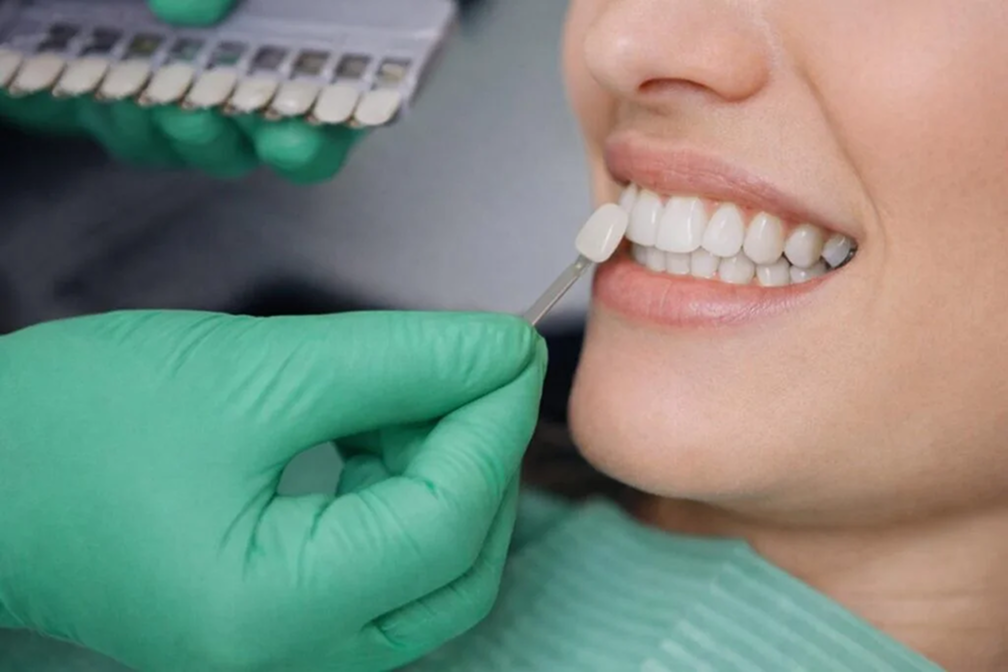
A confident smile is not simply about having perfectly straight teeth. Tooth shape, size, colour, proportion and overall smile balance can all influence the way your smile looks. For people who want to improve the appearance of their teeth, dental veneers in Mohali and Chandigarh can be one of the cosmetic dentistry options worth discussing with a qualified dental professional. At True Smilez, cosmetic dental treatment is approached with an emphasis on individual smile characteristics rather than applying the same design to every patient. Depending on your dental condition and goals, veneers may be considered as part of a personalized smile makeover in Mohali. What Are Dental Veneers? Dental veneers are thin, custom-made coverings designed to improve the appearance of the visible surfaces of teeth. Depending on the patient’s needs, veneers may be used to address certain cosmetic concerns such as: The purpose of veneers is primarily aesthetic. Whether veneers are appropriate depends on the health and condition of your teeth and gums. Why Consider Veneers in Mohali? Many adults and professionals looking for veneers in Mohali are not necessarily looking for a dramatic change. Instead, they may want a smile that appears more balanced, polished and natural. A well-planned veneer treatment considers factors such as: Tooth Proportion The size and shape of each tooth should complement the surrounding teeth. Smile Line The visible relationship between your teeth and lips when you smile is considered during aesthetic planning. Tooth Colour The selected shade should complement your overall appearance rather than looking unnecessarily artificial. Facial Features A smile design can be planned with consideration for the patient’s overall facial proportions. Existing Teeth Your current tooth structure and dental health need to be assessed before cosmetic treatment. This is why a personalized smile design is important. Dental Veneers vs Teeth Whitening Veneers and professional teeth whitening are not the same treatment. Teeth whitening primarily addresses the colour of natural teeth. Dental veneers can potentially change several visible characteristics, including tooth shape, proportion and colour. If your primary concern is only tooth discolouration, whitening may be considered. If you have multiple cosmetic concerns involving tooth shape and appearance, your dentist may discuss veneers or other smile makeover options. The appropriate treatment depends on your individual needs. Veneers and Smile Makeover in Mohali A smile makeover is not a single dental procedure. It is a customized combination of cosmetic dental treatments planned around an individual’s smile. Depending on the case, a smile makeover may involve treatments such as: Not every patient needs every treatment. At True Smilez, the objective is to determine which procedures, if any, are appropriate for your smile rather than unnecessarily combining treatments. Are Dental Veneers Suitable for Everyone? Veneers are not suitable for every patient. \Before considering veneers, your dentist may evaluate: If underlying dental problems are present, they may need to be addressed before cosmetic treatment. A consultation is therefore an important first step before deciding whether veneers are appropriate. What Is the Process for Getting Veneers? 1. Smile Consultation Your concerns, expectations and desired aesthetic outcome are discussed. 2. Dental Assessment Your teeth, gums and bite are evaluated to determine whether veneers are appropriate. 3. Smile Design & Planning The proposed shape, proportions and overall appearance of the smile are planned according to your individual features. 4. Preparation If veneers are recommended, the teeth may require preparation depending on the selected treatment approach. 5. Veneer Placement Custom-made veneers are placed according to the finalized treatment plan. 6. Follow-Up Your dentist evaluates the fit, appearance and overall condition of the completed treatment. How Much Do Dental Veneers Cost in Mohali? One of the common searches is “dental veneers cost in Mohali.” However, there isn’t one fixed price for every patient. The overall treatment investment can depend on: For a premium cosmetic treatment, it is important to consider the quality of planning, materials, clinical expertise and long-term care, rather than choosing a treatment only according to price. A personalized consultation is the best way to understand your treatment requirements and expected investment. Dental Veneers in Chandigarh for a Natural-Looking Smile Patients searching for dental veneers in Chandigarh often want a cosmetic solution that enhances their smile without making it look artificial. A natural-looking result depends on careful attention to: The objective of cosmetic dentistry should be to create a smile that looks harmonious with the individual rather than simply making every tooth look identical. Veneers in Mohali for Professionals For working professionals, entrepreneurs and individuals who regularly interact with clients or attend social events, confidence in their smile can be an important consideration. Veneers may be considered when cosmetic concerns such as uneven tooth shape, discoloration or minor imperfections affect smile confidence. Because cosmetic dentistry is highly individual, a consultation allows you to understand whether veneers are the right option or whether a more conservative treatment may achieve your desired result. Smile Makeover in Zirakpur & Tricity Patients from Zirakpur, VIP Road, Dhakoli, Baltana and surrounding Tricity areas can explore cosmetic dental options in the Mohali-Chandigarh region. Whether your concern is tooth colour, shape, minor imperfections or overall smile aesthetics, the right treatment should begin with a detailed assessment. The goal is not simply to change your teeth—it is to create a treatment plan that fits your smile, dental health and aesthetic expectations. Why Choose True Smilez for Veneers? At True Smilez Dental Clinic, cosmetic dentistry focuses on personalized smile planning and comprehensive dental assessment. Patients from Mohali, Chandigarh and Zirakpur can discuss their concerns and explore options such as: Every smile has different proportions and requirements, which is why treatment planning should be customized rather than based on a standard design. Frequently Asked Questions Are veneers permanent? Veneers are considered a long-term cosmetic dental treatment, but they may eventually require replacement. Their longevity depends on factors including material, oral hygiene, bite and individual habits. Do veneers look natural? When appropriately planned and designed, veneers can be made to complement the patient’s tooth proportions, smile and facial features. Are veneers better than teeth whitening? Neither treatment is universally better. Whitening primarily changes tooth colour, while veneers can address several cosmetic characteristics. The appropriate