

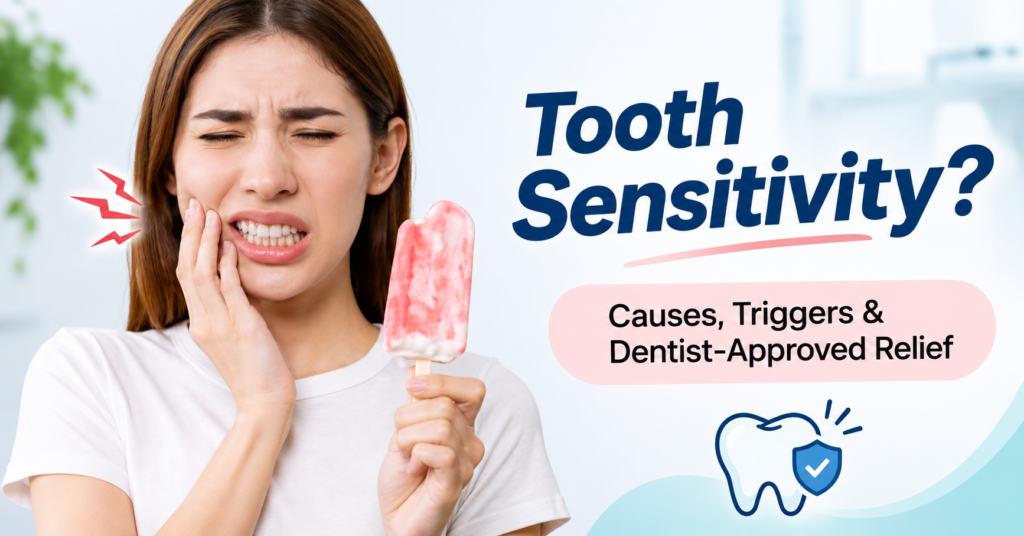
Teeth become sensitive when the protective enamel wears thin or the gums pull back, exposing the softer layer underneath (dentin), which connects to the tooth’s nerve. The most common sensitive teeth causes are enamel erosion, gum recession, brushing too hard, cavities, cracked teeth and teeth grinding. A sensitivity toothpaste, a soft brush, less acid in your diet and fixing the underlying problem relieve most cases. If the pain is sharp, lingers or keeps getting worse, see a dentist.
What Does Tooth Sensitivity Feel Like?
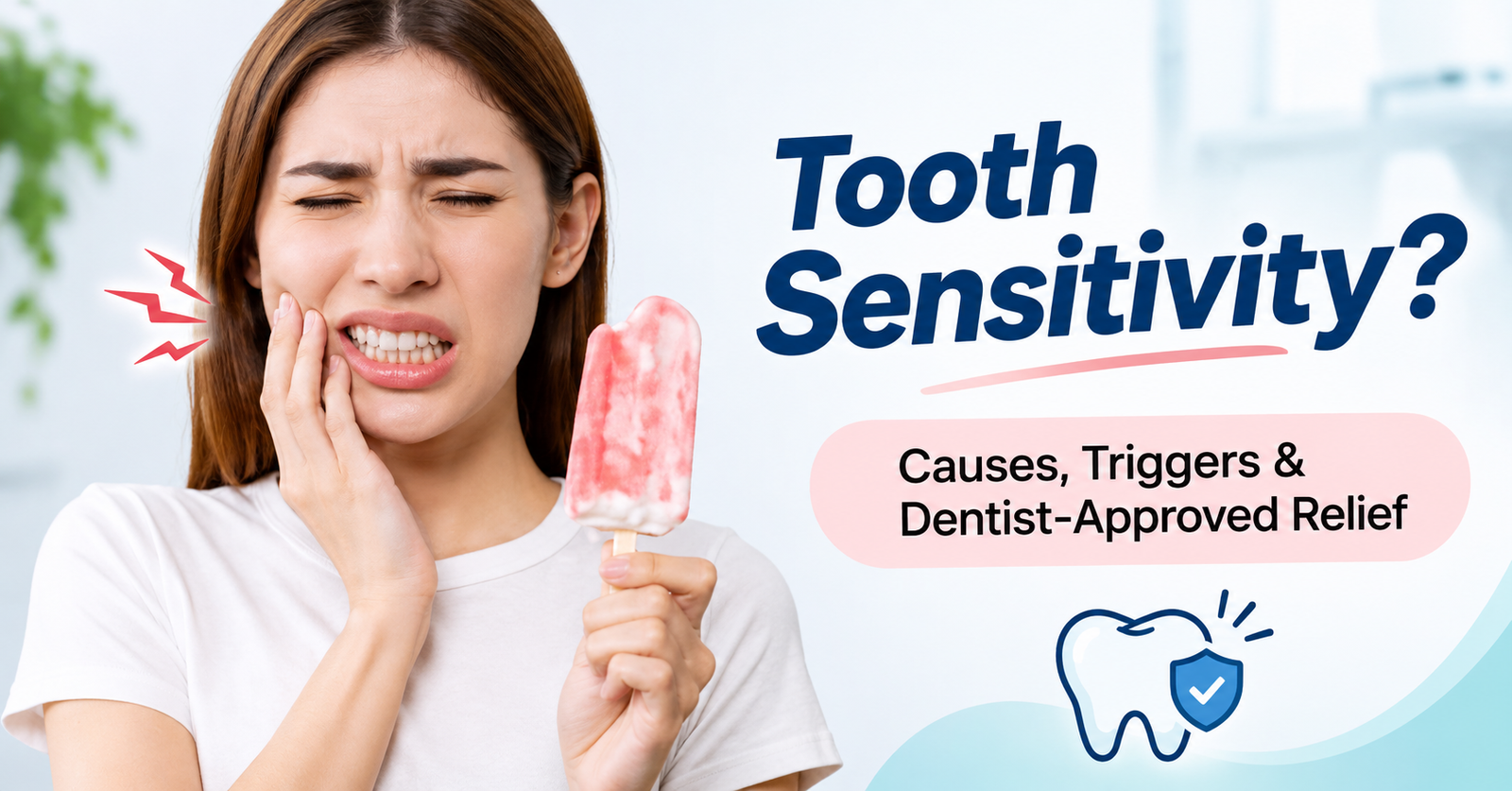
Most people describe a quick, sharp zing when something cold, hot, sweet or sour touches a tooth, or even when cold air hits it. Cold sensitivity is the most common version, like that jolt from ice cream or a glass of cold water. The pain usually fades within a few seconds once the trigger is gone.
Some people also feel it while brushing, or when they bite down. It can affect one tooth, a few, or all of them.
Why Do Teeth Become Sensitive?
Each tooth has a hard outer layer of enamel on the crown and a thinner covering over the root. Under both lies dentin, which is full of tiny channels leading to the nerve. When enamel wears away or the gum recedes, those channels are exposed, so heat, cold, sugar and acid reach the nerve more easily. That’s what you feel as sensitivity.
Sensitive Teeth Causes: What’s Behind It?
1. Enamel erosion
Enamel erosion happens when acid slowly dissolves the surface of the teeth. Fizzy drinks, citrus, packaged juices, vinegar-heavy foods and frequent snacking are common culprits, as is acid reflux. Once enamel is lost, it doesn’t grow back.
2. Brushing too hard
A hard brush and a heavy hand can wear away enamel and push the gums back, especially near the gum line. Many people think scrubbing harder means cleaner teeth, but it does more harm than good.
3. Receding gums
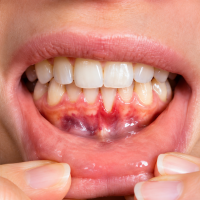
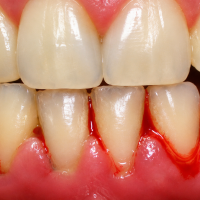
Gums can recede from age, gum disease, brushing too hard or grinding. When they pull back, the root surface becomes exposed, and it has no enamel to protect it, so it’s very sensitive.
4. Tooth decay and worn fillings
A cavity can break through the enamel and expose the dentin. An old filling that has cracked or leaks can do the same. Sensitivity in just one tooth is often a clue to this.
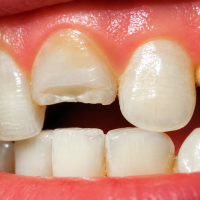
5. A cracked or chipped tooth
A crack, even a tiny one, lets hot, cold and sweet things reach the inside of the tooth. The pain may come and go and is often worse when you bite or release a bite.
6. Teeth grinding
Grinding or clenching, often during sleep, wears down enamel and can crack teeth over time. If you wake up with a sore jaw or headaches, it’s worth mentioning to your dentist.
7. Recent dental treatment
Whitening, cleaning or a new filling can make your teeth sensitive for a short time. It’s usually temporary and settles within days or a couple of weeks.
8. Plaque and gum disease
Plaque and gum problems irritate the gums and can lead to recession, which makes the roots more sensitive. That’s another reason to keep up with regular cleanings.
Sensitive Teeth Causes at a Glance
| Cause | Typical clue | What usually helps |
|---|---|---|
| Enamel erosion | Sensitivity in many teeth, teeth look dull or worn | Less acid, fluoride, sensitivity toothpaste |
| Brushing too hard | Sensitivity near the gum line, notches at the neck of teeth | Soft brush, gentle technique |
| Receding gums | Teeth look longer, roots visible | Treating the gum problem, desensitising care |
| Cavity or worn filling | One tooth, pain with sweet things | Filling or repair |
| Cracked tooth | Pain when biting or releasing | Dental assessment and repair |
| Grinding | Worn teeth, sore jaw in the morning | Night guard |
| Recent treatment | Starts after whitening or dental work | Usually settles on its own |
7 Ways to Get Relief From Sensitive Teeth
1. Use a sensitivity toothpaste
A desensitising toothpaste is the first thing most dentists suggest. These pastes help block the tiny channels in the dentin or calm the nerve’s response. Use it twice a day, every day, and give it a few weeks, since the effect builds up with regular use. Spit out the paste and avoid rinsing straight away so it stays on your teeth a little longer.
2. Switch to a soft brush and gentle technique
Use a soft-bristled brush, light pressure and slow circular movements. Many brushes now have a pressure sensor, and a soft brush is a simple, low-cost change that can make a real difference.
3. Add fluoride
Fluoride strengthens enamel and reduces sensitivity. A fluoride toothpaste is the baseline, and a fluoride mouthwash can help too. Your dentist can also apply a stronger fluoride varnish or gel in the clinic.
4. Go easy on acidic foods and drinks
You don’t have to give up everything. Have acidic drinks with meals instead of sipping them all day, use a straw, rinse with water afterwards and wait about half an hour before brushing, since enamel is softer right after acid.
5. Wear a night guard if you grind
If you clench or grind your teeth, a custom-fitted night guard protects your enamel and reduces the strain. It also helps with morning jaw pain.
6. Get in-clinic desensitising treatment
For stronger sensitivity, a dentist can apply desensitising agents, sealants or a thin bonded layer over exposed areas, such as worn spots near the gum line. These give longer-lasting protection than toothpaste alone.
7. Treat the underlying problem
Sensitivity is a symptom, and sometimes the cause needs a proper fix. That might be a filling for a cavity, repair of a cracked tooth, treatment for gum disease or a gum graft for severe recession. If the nerve is badly affected, a root canal may be needed. Sorting out the cause is what gives lasting relief.
Sensitive Teeth Remedies You Can Try at Home
For mild sensitivity, a few simple habits can help while you wait for your appointment:
- Warm salt water rinses can soothe irritated gums.
- Lukewarm drinks and foods are kinder than very hot or very cold ones.
- Breathing through your nose in cold air, and covering your mouth in winter, can reduce cold zings.
- Clove oil (laung), a traditional remedy, can give brief numbing relief, but it can burn the gums if used undiluted. Treat it as a short-term measure at most.
These ease the symptoms, but they don’t fix the cause. If the sensitivity is more than mild, or keeps coming back, get it checked.
Should You Avoid Whitening if You Have Sensitive Teeth?
Not necessarily, but talk to your dentist first. Whitening can cause temporary sensitivity, and teeth with exposed roots or cavities need to be treated beforehand. A dentist can adjust the method, and a desensitising toothpaste before and after can help.
When Should You See a Dentist?
Book a visit if:
- the pain is sharp, strong or lingers long after the trigger is gone
- it hurts without any trigger, or wakes you up at night
- only one tooth is affected, or it hurts when you bite
- you see a dark spot, hole or crack in a tooth
- your gums are red, swollen or receding
- sensitivity hasn’t improved after two to three weeks of using sensitivity toothpaste
If you have swelling in your face or gum along with the pain, see a dentist promptly.
Frequently Asked Questions
What are the most common sensitive teeth causes?
Enamel erosion, receding gums, brushing too hard, cavities, cracked teeth and teeth grinding are the main ones. Recent whitening or dental work can also cause temporary sensitivity.
Why are my teeth suddenly sensitive to cold?
A sudden change can point to a new cavity, a cracked tooth, a worn filling or gum recession. If it’s sudden and in one tooth, get it checked.
Does sensitivity toothpaste really work?
Yes, for many people, when used regularly for a few weeks. It works best for mild sensitivity. Stronger or persistent sensitivity needs a dentist.
Can sensitive teeth go away on their own?
Sensitivity from recent treatment often settles by itself. If it’s caused by wear, recession, decay or a crack, it usually needs treatment.
What is tooth sensitivity treatment at a dentist?
It can include fluoride varnish, desensitising agents, bonding over exposed areas, fillings, gum treatment, a night guard or, in severe cases, root canal treatment.
Is enamel erosion reversible?
Lost enamel doesn’t grow back, but you can strengthen what’s left with fluoride and prevent further wear. A dentist can also protect worn areas.
Are sensitive teeth a sign of a cavity?
Sometimes. Sensitivity in one tooth, especially to sweet things or when chewing, can point to decay, so it’s worth a check.
Can I use whitening toothpaste if my teeth are sensitive?
Usually it’s best to avoid it for now, since some contain stronger abrasives. Ask your dentist which toothpaste suits you.
Dealing With Sensitive Teeth in Mohali?
Sensitivity is common and very treatable once the cause is known. Explore our expert dental solutions in Mohali, or book a check-up at TrueSmilez Dental Clinic to find out what’s behind it and how to get lasting relief.