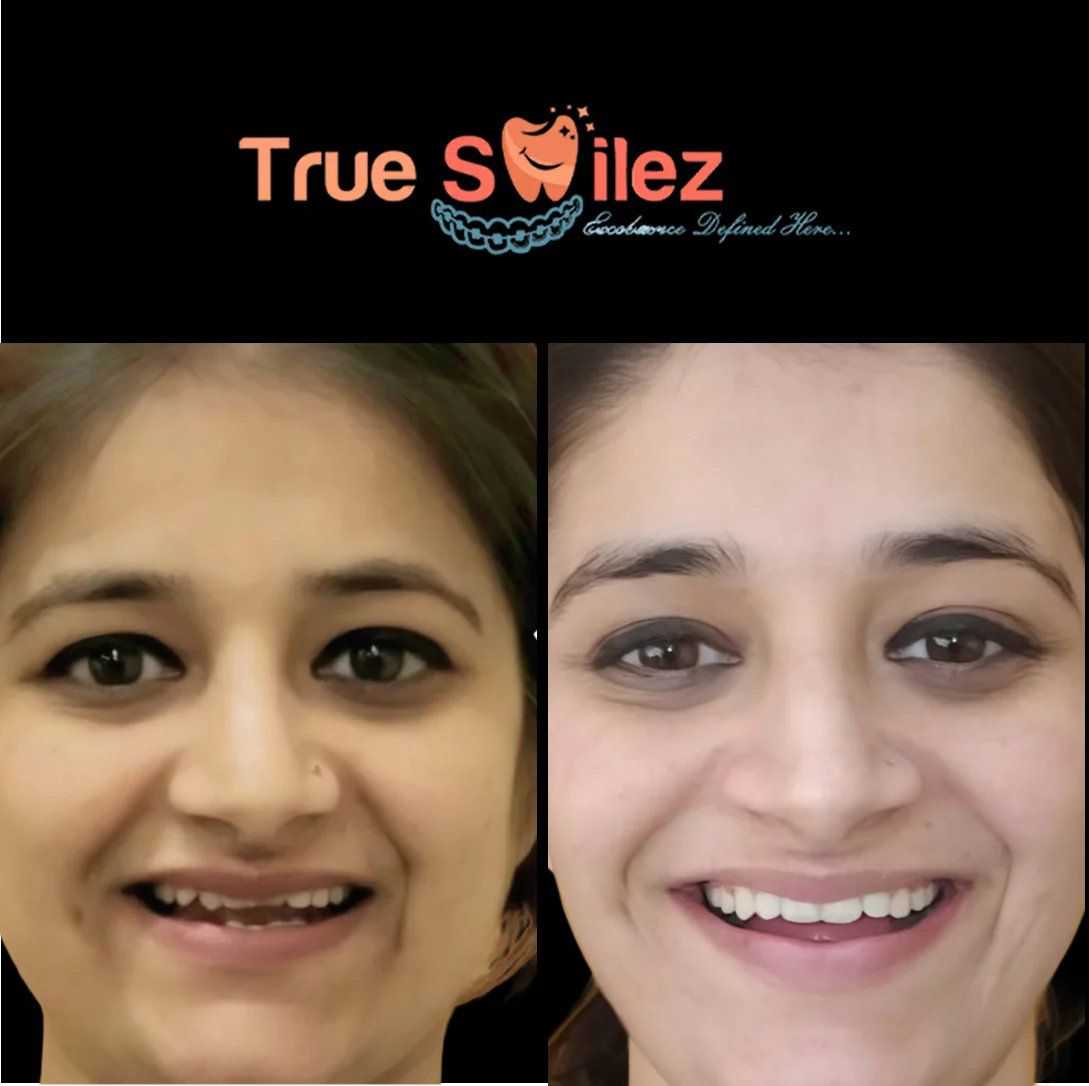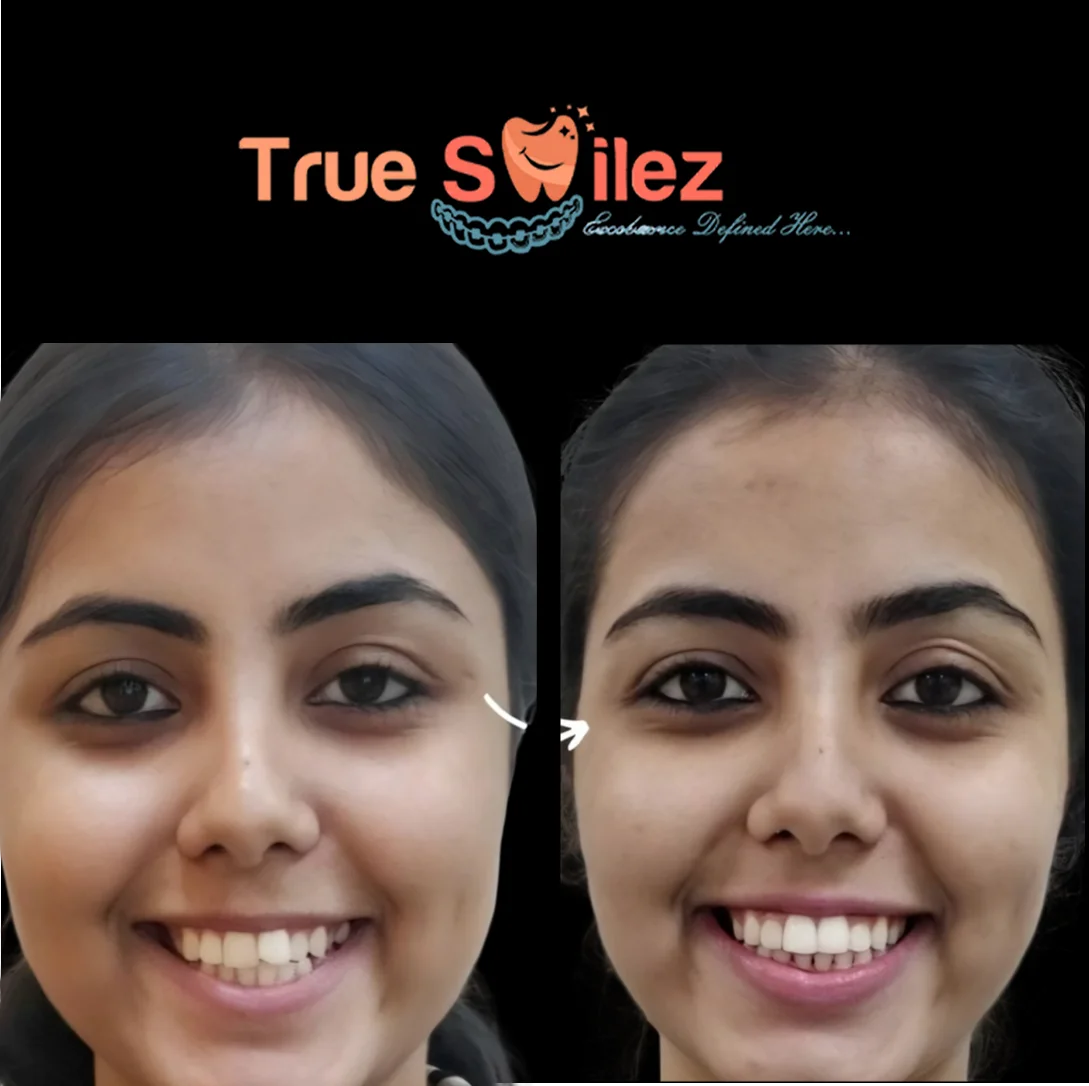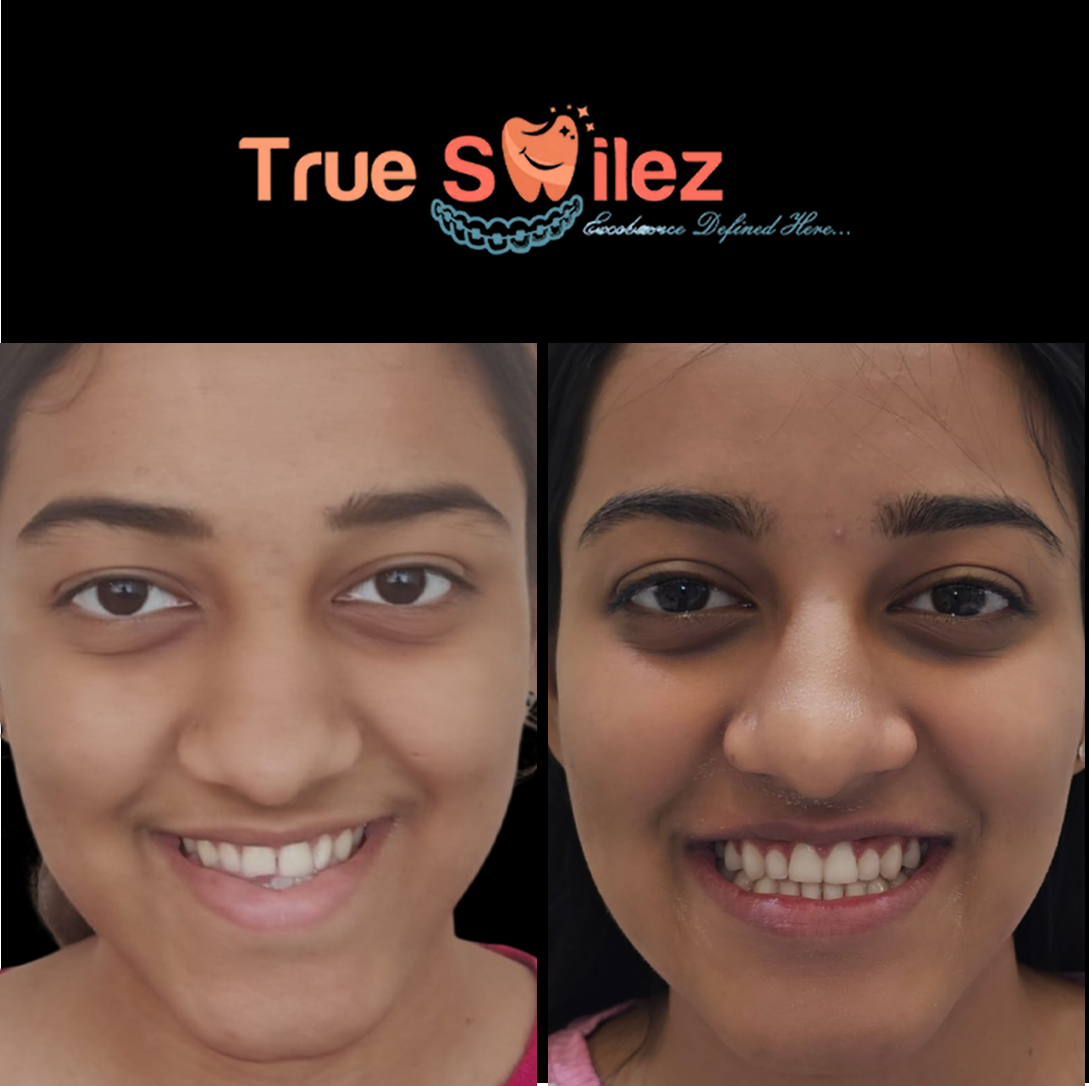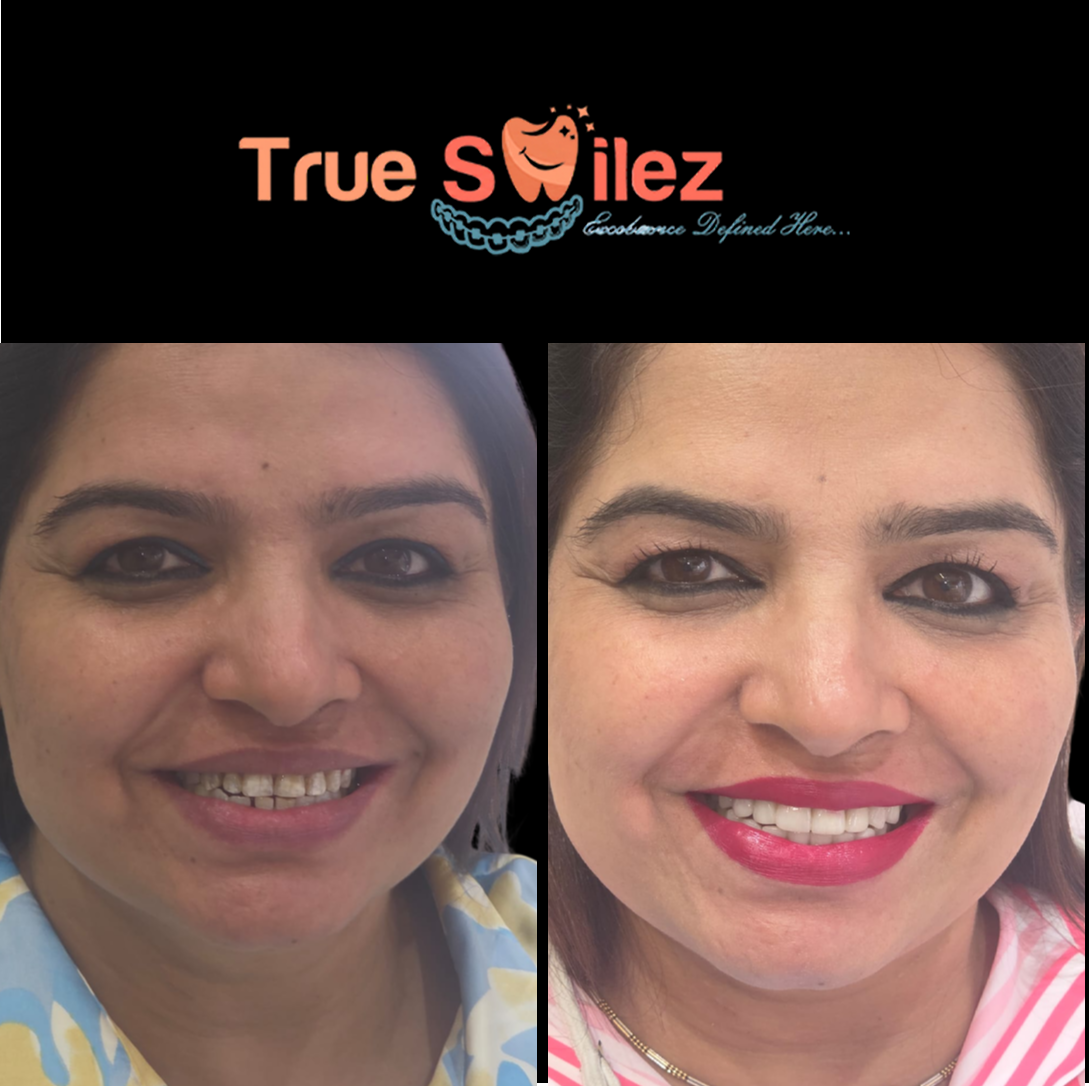


Home remedies for teeth whitening can lift a little surface staining, mostly the kind that comes from chai, coffee and food. What they can’t do is change the actual shade of your teeth. If you want a clear, visible difference, professional whitening is the only thing that does it reliably. And a couple of popular “natural” tricks, lemon juice and apple cider vinegar in particular, can hurt your enamel, so it’s better to leave those alone.
Why Are Your Teeth Yellow in the First Place?
This is the first thing we ask patients, because the answer decides what will actually work for you.
Some stains sit on the surface. They come from chai, coffee, cola, red wine, tobacco, gutka, paan and strongly coloured food. Plaque and tartar can also make teeth look dull and yellow.
Other discolouration starts inside the tooth. As we get older, enamel gets thinner and the yellowish layer underneath (called dentin) begins to show through. Certain medicines taken in childhood, too much fluoride while the teeth were forming, or an old knock to a tooth can cause it as well.
Home remedies only reach the first kind. That’s really the heart of this whole topic.
Home Remedies for Teeth Whitening: What’s Worth Trying?
Here’s an honest look at the usual suspects.
Baking soda
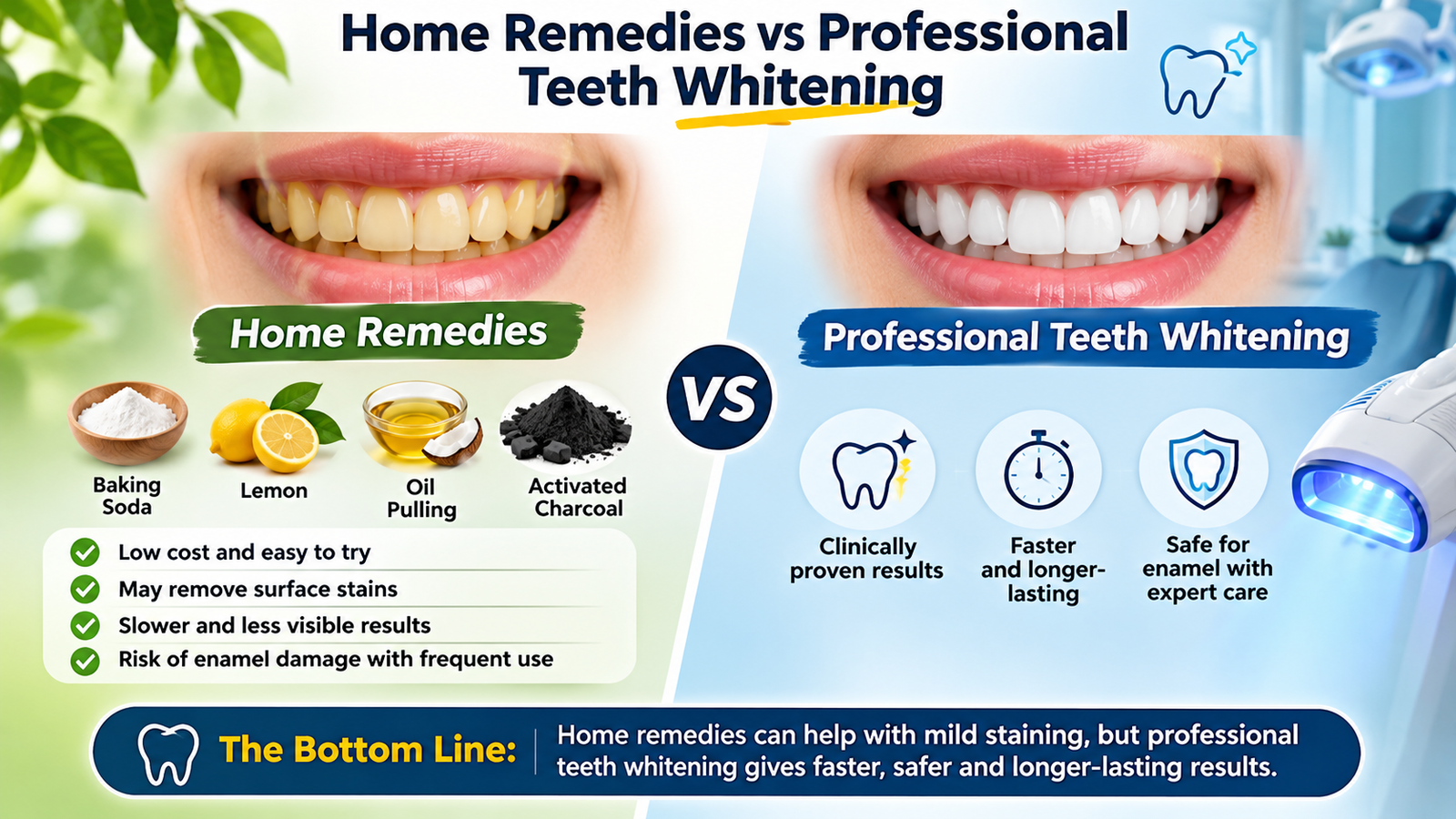
Baking soda whitening is probably the most popular DIY method. It’s a mild abrasive, so it scrubs light stains off the surface, which is why you’ll find it in a lot of toothpastes. But it doesn’t bleach anything, and rubbing a homemade paste on your teeth every day slowly wears the enamel down. Once in a while is fine. Every day isn’t.
Whitening toothpaste
This is the one we’d actually keep in your routine. A good whitening toothpaste uses gentle polishing agents to lift surface stains over a few weeks. Don’t expect a dramatic change, since most of them contain little or no bleaching agent. Think of it as upkeep, a way to stop new stains building up after a cleaning or whitening session.
Oil pulling
Swishing coconut or sesame oil is a harmless habit, and plenty of people like it. The evidence that it whitens teeth is thin, though, so don’t count on a shade change from it.
Activated charcoal
Charcoal pastes are everywhere on social media. They’re gritty enough to scratch enamel, and there’s not much proof they whiten anything. We’d skip them.
Lemon juice, apple cider vinegar and strawberries
This is where DIY whitening tends to go wrong. These are acidic, and acid softens enamel. Enamel doesn’t grow back, and the thinner it gets, the more of the yellow dentin shows. So you can end up with teeth that look yellower than when you started.
Hydrogen peroxide rinses
Peroxide is the active ingredient in professional whitening, so rinsing with it sounds logical. The diluted version you can buy is too weak, and it’s in your mouth for too short a time, to make a visible difference. Stronger mixes made at home can irritate or burn your gums. It isn’t worth the risk without a dentist’s advice.
How Professional Whitening Is Different
A dentist uses a stronger, carefully controlled bleaching gel that goes into the enamel and breaks down stain from the inside. That’s why it can lighten colour that no toothpaste can reach.
A typical visit goes something like this:
- The dentist checks your teeth and cleans off plaque and tartar, because the gel can’t work properly through build-up.
- Your gums are covered with a protective barrier.
- The whitening gel is applied, sometimes with a special light to speed it up.
- Your shade is compared with where you started.
- You get aftercare tips, usually about avoiding dark foods and drinks for the first couple of days.
Many people see a clear difference after a single sitting, and the dentist can adjust the process if your teeth are sensitive. If you’re not sure whether you need whitening or just a good clean, our guide on teeth cleaning vs teeth whitening explains how the two differ.
Home Remedies vs Professional Whitening at a Glance
| Factor | Home Remedies | Whitening Toothpaste | Professional Whitening |
|---|---|---|---|
| Works on surface stains | Mildly | Yes | Yes |
| Works on deep (intrinsic) stains | No | No | Often, yes |
| Speed of results | Slow, or none | Gradual, over weeks | Visible in one visit |
| Safety for enamel | Varies, some are harmful | Generally safe | Safe when supervised |
| Gum protection | None | Not needed | Part of the procedure |
| How long it lasts | Short | Maintenance only | Longer, with good habits |
| Best for | Occasional upkeep | Daily upkeep | A noticeable change in shade |
So, What Really Works?
Honestly, a mix of both. Professional whitening is what you want when you’re after a real change in shade. A whitening toothpaste then helps you hold on to the result and deal with new surface stains. The acidic and abrasive DIY tricks just aren’t worth the enamel damage.
If your staining is light and comes mostly from tea or coffee, a professional cleaning plus a whitening toothpaste might be all you need. If your teeth have been yellow for years, or look dull even though you brush well, whitening at a clinic is the more realistic fix.
Who Should Talk to a Dentist First?
Whitening isn’t right for everyone. Check with a dentist before you start if you:
- have sensitive teeth or receding gums
- have cavities or untreated gum problems
- have crowns, veneers, fillings or bonding on your front teeth, since these don’t change colour with bleaching
- are pregnant or breastfeeding
If you have restorations, or the discolouration is stubborn, veneers and smile designing may suit you better than whitening.
Keeping Your Teeth White for Longer
A few small habits make a big difference. Rinse with water after chai, coffee, cola or wine. Use a straw for dark drinks when you can. Brush twice a day with a fluoride toothpaste and floss daily. If you use tobacco in any form, cutting it out will do more for your smile than any whitening product. And get a professional cleaning about every six months.
Frequently Asked Questions
Do home remedies for teeth whitening really work?
Only a little. Baking soda and whitening toothpaste can lift light surface stains, but no home remedy changes the natural colour of your teeth the way professional whitening can.
Is baking soda whitening safe for teeth?
Used now and then, it’s generally fine. Used daily, it can wear down enamel because it’s abrasive. If your teeth feel sensitive afterwards, stop and see a dentist.
What is the fastest way to whiten yellow teeth?
Professional whitening at a dental clinic. Many people see a visible difference in just one visit.
Can whitening toothpaste make teeth white on its own?
It can reduce surface stains and help you maintain results, but most whitening toothpastes only give a subtle change.
Is natural teeth whitening better than professional whitening?
Not for results. Natural methods sound gentler, but some of them, like lemon juice and vinegar, can damage enamel. Professional whitening works better and is done with your gums and enamel protected.
How long does professional whitening last?
Anywhere from several months to a couple of years. It depends on what you eat and drink, how well you look after your teeth, and whether you smoke or have a lot of tea and coffee.
Does teeth whitening damage enamel?
When a dentist does it on healthy teeth, it’s considered safe. Damage is far more likely to come from acidic or abrasive home remedies.
Why are my teeth yellow even though I brush regularly?
Brushing can’t reach old stains or change the colour inside the tooth. Ageing, thinner enamel and some medicines can all cause yellowing. A dentist can tell you whether cleaning, whitening or something else is the right answer.
Thinking About Professional Whitening in Mohali?
If home remedies haven’t given you the result you wanted, a dentist can look at what’s causing the discolouration and suggest a safe plan that fits your teeth. Have a look at our expert dental solutions in Mohali, or book a consultation at TrueSmilez Dental Clinic to find out which whitening option suits you.