

Home Remedies vs Professional Teeth Whitening: What Really Works?
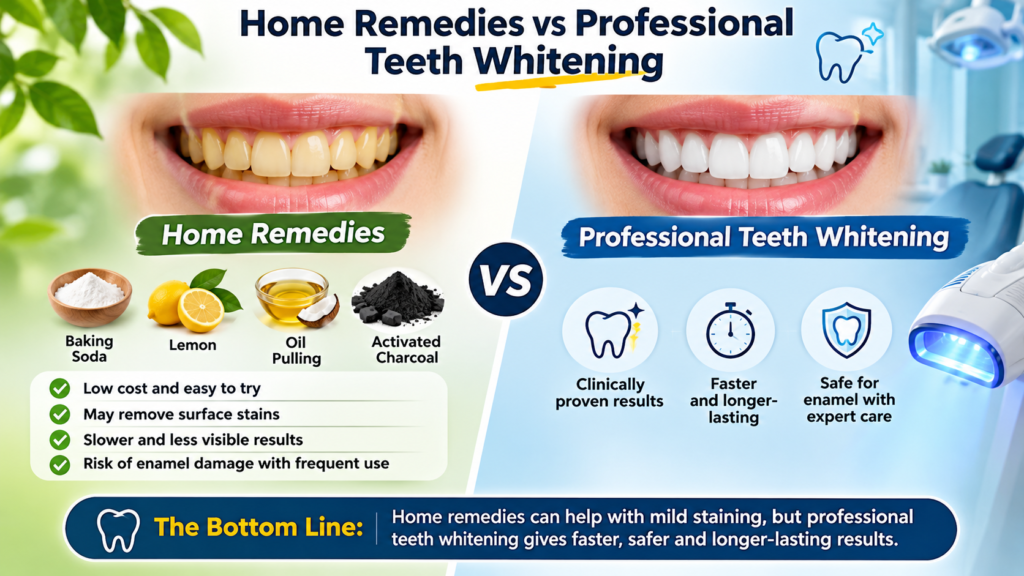
Home remedies for teeth whitening can lift a little surface staining, mostly the kind that comes from chai, coffee and food. What they can’t do is change the actual shade of your teeth. If you want a clear, visible difference, professional whitening is the only thing that does it reliably. And a couple of popular “natural” tricks, lemon juice and apple cider vinegar in particular, can hurt your enamel, so it’s better to leave those alone. Why Are Your Teeth Yellow in the First Place? This is the first thing we ask patients, because the answer decides what will actually work for you. Some stains sit on the surface. They come from chai, coffee, cola, red wine, tobacco, gutka, paan and strongly coloured food. Plaque and tartar can also make teeth look dull and yellow. Other discolouration starts inside the tooth. As we get older, enamel gets thinner and the yellowish layer underneath (called dentin) begins to show through. Certain medicines taken in childhood, too much fluoride while the teeth were forming, or an old knock to a tooth can cause it as well. Home remedies only reach the first kind. That’s really the heart of this whole topic. Home Remedies for Teeth Whitening: What’s Worth Trying? Here’s an honest look at the usual suspects. Baking soda Baking soda whitening is probably the most popular DIY method. It’s a mild abrasive, so it scrubs light stains off the surface, which is why you’ll find it in a lot of toothpastes. But it doesn’t bleach anything, and rubbing a homemade paste on your teeth every day slowly wears the enamel down. Once in a while is fine. Every day isn’t. Whitening toothpaste This is the one we’d actually keep in your routine. A good whitening toothpaste uses gentle polishing agents to lift surface stains over a few weeks. Don’t expect a dramatic change, since most of them contain little or no bleaching agent. Think of it as upkeep, a way to stop new stains building up after a cleaning or whitening session. Oil pulling Swishing coconut or sesame oil is a harmless habit, and plenty of people like it. The evidence that it whitens teeth is thin, though, so don’t count on a shade change from it. Activated charcoal Charcoal pastes are everywhere on social media. They’re gritty enough to scratch enamel, and there’s not much proof they whiten anything. We’d skip them. Lemon juice, apple cider vinegar and strawberries This is where DIY whitening tends to go wrong. These are acidic, and acid softens enamel. Enamel doesn’t grow back, and the thinner it gets, the more of the yellow dentin shows. So you can end up with teeth that look yellower than when you started. Hydrogen peroxide rinses Peroxide is the active ingredient in professional whitening, so rinsing with it sounds logical. The diluted version you can buy is too weak, and it’s in your mouth for too short a time, to make a visible difference. Stronger mixes made at home can irritate or burn your gums. It isn’t worth the risk without a dentist’s advice. How Professional Whitening Is Different A dentist uses a stronger, carefully controlled bleaching gel that goes into the enamel and breaks down stain from the inside. That’s why it can lighten colour that no toothpaste can reach. A typical visit goes something like this: Many people see a clear difference after a single sitting, and the dentist can adjust the process if your teeth are sensitive. If you’re not sure whether you need whitening or just a good clean, our guide on teeth cleaning vs teeth whitening explains how the two differ. Home Remedies vs Professional Whitening at a Glance Factor Home Remedies Whitening Toothpaste Professional Whitening Works on surface stains Mildly Yes Yes Works on deep (intrinsic) stains No No Often, yes Speed of results Slow, or none Gradual, over weeks Visible in one visit Safety for enamel Varies, some are harmful Generally safe Safe when supervised Gum protection None Not needed Part of the procedure How long it lasts Short Maintenance only Longer, with good habits Best for Occasional upkeep Daily upkeep A noticeable change in shade So, What Really Works? Honestly, a mix of both. Professional whitening is what you want when you’re after a real change in shade. A whitening toothpaste then helps you hold on to the result and deal with new surface stains. The acidic and abrasive DIY tricks just aren’t worth the enamel damage. If your staining is light and comes mostly from tea or coffee, a professional cleaning plus a whitening toothpaste might be all you need. If your teeth have been yellow for years, or look dull even though you brush well, whitening at a clinic is the more realistic fix. Who Should Talk to a Dentist First? Whitening isn’t right for everyone. Check with a dentist before you start if you: If you have restorations, or the discolouration is stubborn, veneers and smile designing may suit you better than whitening. Keeping Your Teeth White for Longer A few small habits make a big difference. Rinse with water after chai, coffee, cola or wine. Use a straw for dark drinks when you can. Brush twice a day with a fluoride toothpaste and floss daily. If you use tobacco in any form, cutting it out will do more for your smile than any whitening product. And get a professional cleaning about every six months. Frequently Asked Questions Do home remedies for teeth whitening really work? Only a little. Baking soda and whitening toothpaste can lift light surface stains, but no home remedy changes the natural colour of your teeth the way professional whitening can. Is baking soda whitening safe for teeth? Used now and then, it’s generally fine. Used daily, it can wear down enamel because it’s abrasive. If your teeth feel sensitive afterwards, stop and see a dentist. What is the fastest way to whiten yellow teeth? Professional whitening at a dental clinic. Many
Bad Breath That Won’t Go Away? Causes & Dentist-Approved Fixes

What Causes Bad Breath That Won’t Go Away? The most common bad breath causes are bacteria on the tongue and between the teeth, gum problems, dry mouth, leftover food, tobacco use and certain foods or medicines. In most people, persistent mouth odor starts inside the mouth, which means a dental checkup, a professional cleaning and better tongue and gum care usually solve it. If the odor continues even with good oral hygiene, a dentist can look for hidden causes and tell you whether you need to see a doctor as well. What Is Bad Breath (Halitosis)? Bad breath, medically called halitosis, is an unpleasant smell coming from the mouth. It can be occasional, like “morning breath”, or ongoing. Persistent mouth odor is often caused by sulphur compounds released when bacteria break down food particles, dead cells and proteins in the mouth. Many people do not notice their own breath, so it helps to ask a trusted person or check the signs below. Common signs Top Bad Breath Causes 1. Bacteria on the Tongue The back of the tongue is rough and holds bacteria, food debris and dead cells. This coating is one of the biggest sources of mouth odor. Skipping tongue cleaning allows it to build up daily. 2. Plaque, Tartar and Gum Problems Plaque that is not removed hardens into tartar. Bacteria collect along the gum line and in gaps between teeth, causing odor, redness and bleeding. Gums that pull away from the teeth form pockets that trap bacteria, and those are hard to clean at home. 3. Cavities and Food Stuck Between Teeth Decayed teeth, broken fillings and tight spaces trap food. As it breaks down, it creates a strong smell that brushing alone may not remove. 4. Dry Mouth Saliva naturally rinses away bacteria. When the mouth is dry, because of dehydration, mouth breathing, snoring, certain medicines or long gaps between meals, odor increases. This is why breath is worst in the morning. 5. Food and Drink Onion, garlic, spicy dishes, coffee and some strong-smelling foods leave odor molecules that are carried in the breath. This type usually fades within hours. 6. Tobacco and Betel Products Smoking, chewing tobacco, paan and gutkha leave a lasting smell, dry the mouth, and irritate the gums. They are major causes of persistent bad breath. 7. Dental Appliances and Poor Fit Dentures, retainers, braces and aligners that are not cleaned properly collect bacteria and food. Ill-fitting restorations can also trap debris. 8. Causes Outside the Mouth In a smaller number of cases, odor can come from the throat, nose, sinuses or digestive system. If your dentist finds a healthy mouth but the odor continues, they may suggest a visit to a physician. How to Stop Bad Breath: Daily Habits That Help Tongue Cleaning: The Step Many People Skip A tongue scraper or the back of a soft toothbrush removes the coating that causes much of the odor. Be gentle. Scraping too hard can irritate the tongue. Bad Breath Remedies: What Works and What Doesn’t Remedy Does It Help? Notes Brushing and flossing Yes The foundation of every plan Tongue cleaning Yes Often gives the fastest improvement Drinking water Yes Fights dry mouth Sugar-free gum Partly Helps saliva flow, but only for a short time Mouthwash Partly Masks or reduces odor temporarily; does not remove plaque Mints and sprays Short term Only cover the smell Fennel seeds, cardamom, cloves Short term Freshen breath for a while Professional cleaning Yes Removes tartar that home care cannot Treating gum or tooth problems Yes Fixes the actual source If the odor keeps returning, it usually means the cause has not been treated yet, and masking it will not work for long. When to See a Dentist for Halitosis Treatment Book a dental visit if you notice: What a dentist does for halitosis treatment To see the range of care available, visit Expert Dental Solutions in Mohali. Lifestyle Changes That Reduce Mouth Odor Common Myths About Bad Breath Frequently Asked Questions What are the most common bad breath causes? Bacteria on the tongue, plaque and tartar, gum problems, cavities, dry mouth, tobacco use and strong foods are the most common causes. Most start in the mouth. How to stop bad breath quickly? Brush, floss, scrape your tongue and drink water. These steps give the fastest real improvement. Mints and mouthwash can help briefly, but they only mask the odor. Why does my breath smell even after brushing? The cause may be on the tongue, between the teeth, under the gums or in a damaged tooth, all places a toothbrush may not reach. A dental check can find the source. Can bad breath come from the stomach? Sometimes, but this is less common. In most cases the source is in the mouth, which is why a dentist is usually the first stop. Does mouthwash cure halitosis? No. Mouthwash can reduce odor for a short time, but it does not remove plaque, tartar or the cause of the problem. Is tongue cleaning really necessary? Yes. The tongue holds a large share of odor-causing bacteria, and daily tongue cleaning often makes a clear difference. How does dry mouth cause bad breath? Saliva washes away bacteria and food particles. When there is less of it, bacteria multiply and odor increases. How long does it take to get rid of bad breath? With good habits and a professional cleaning, many people notice improvement within days. Persistent cases depend on what is causing them. Can bad breath be a sign of a serious problem? Usually it points to a dental cause, but if it continues even after dental care, a doctor should check for other causes. How often should I visit the dentist to prevent bad breath? Every six months is a good routine, or sooner if you notice bleeding gums, dryness or a recurring odor. Final Thoughts Bad breath is common, treatable and rarely something to be embarrassed about. The key is finding the true cause rather than covering it
Gap in Teeth? 5 Ways to Close It Without Surgery
How to Fix a Gap in Teeth Without Surgery You can fix a gap in teeth without surgery using one of five common options: teeth bonding, veneers, clear aligners or braces, dental crowns in selected cases, and gap-closing habits and retainers for minor or recurring spacing. The right choice depends on the size of the gap, the cause behind it, and the condition of your teeth and gums. A short dental examination is the fastest way to know which diastema treatment will suit you. What Is a Gap in Teeth (Diastema)? A gap between teeth is called a diastema. It most often appears between the two upper front teeth, but it can occur anywhere in the mouth. Many people live comfortably with a gap, and some even like it. Others want it closed for appearance, comfort or food trapping. Common reasons gaps form Knowing the cause matters, because a gap that keeps reopening needs a different plan from one that is simply cosmetic. 5 Ways to Close a Gap Without Surgery 1. Teeth Bonding Teeth bonding uses a tooth-coloured composite resin that is shaped onto the edges of the teeth beside the gap. The dentist matches the shade, sculpts the material and sets it with a special light. 2. Veneers for Gaps Veneers are thin shells, usually made of porcelain or ceramic, bonded to the front of the teeth. Veneers for gaps close spaces and improve shape, size and colour in the same treatment. To see how smile makeovers are planned, visit Veneers & Smile Designing in Mohali. 3. Clear Aligners or Braces Aligners for gaps move the teeth themselves, closing the space by gentle pressure over time. Traditional braces do the same job with brackets and wires. 4. Dental Crowns (Selected Cases) When a tooth is small, worn or already damaged, a crown can restore its size and help close the space beside it. 5. Retainers and Habit Correction Sometimes the gap is mild, or it reopens after earlier treatment. A custom retainer can hold teeth in position, and correcting habits like tongue thrusting or thumb sucking removes the force that keeps spacing the teeth. Comparison: Which Diastema Treatment Fits You? Option Best For Time Needed Reversible? Main Trade-off Teeth bonding Small to medium gaps Usually one visit Mostly May stain or chip over time Veneers Gap plus colour or shape changes Two or more visits No Involves enamel reshaping Aligners / braces Larger or multiple gaps Several months Yes Retainer wear needed afterwards Crowns Damaged or small teeth Two or more visits No Removes more tooth structure Retainers / habit correction Mild gaps and relapse Ongoing Yes Limited for larger gaps How to Choose the Right Option A few questions help narrow the choice: A dentist will also check your gums, bite and the cause of the gap before recommending a plan. Can a Gap Come Back After Treatment? Yes, especially after aligners or braces. Teeth tend to drift toward their old positions, so wearing a retainer as advised is important. If the gap was caused by a habit or a tissue band between the front teeth, treating that cause helps the result last. Do Home Remedies or DIY Methods Work? No. Rubber bands, DIY gap-closing kits and similar tricks can damage gums, loosen teeth and make the problem worse. Safe gap closure should always be planned and monitored by a dentist. Gap Teeth Treatment in Mohali: What to Look For If you are searching for gap teeth treatment in Mohali, check the following before booking: To explore the full range of care available, see Expert Dental Solutions in Mohali. Aftercare Tips Frequently Asked Questions How to fix a gap in teeth without surgery? The main non-surgical options are teeth bonding, veneers, clear aligners or braces, crowns in selected cases, and retainers. Your dentist will recommend the one that fits the gap size, cause and your goals. What is the fastest way to close a gap in teeth? Teeth bonding is usually the fastest, often completed in a single visit. It suits small to medium gaps. Is teeth bonding permanent? Bonding is long-lasting but not permanent. The resin can chip or stain and may need repair or replacement over time. Are veneers good for gaps between front teeth? Yes. Veneers for gaps close spaces and improve shape and colour at the same time. They are a longer-term decision because some enamel is reshaped. Can aligners close gaps in teeth? Yes. Aligners for gaps work well for many cases, especially larger or multiple gaps, by moving teeth gradually into position. A retainer is needed afterwards. Why does the gap between my front teeth keep coming back? This can happen because of habits, a tissue band between the teeth, or not wearing a retainer after treatment. Treating the underlying cause helps keep the gap closed. Does closing a gap hurt? Bonding and veneers are usually comfortable and often need little or no anaesthesia. Aligners can cause mild pressure for a few days after each new set. Is diastema treatment safe for teenagers? Many gaps change as permanent teeth settle, so dentists often monitor teens first. Treatment is planned based on age, growth and the cause of the gap. Can I close a gap in teeth at home? No. DIY methods can harm your gums and teeth. Always get a dental assessment first. Do I need to treat a gap in my teeth at all? Not always. If the gap does not trap food, affect your bite or bother you, treatment is optional. It is a personal choice, and a dentist can help you decide. Final Thoughts A gap in your teeth can be closed in several comfortable, non-surgical ways. Bonding is quick, veneers give a complete smile makeover, and aligners reposition the teeth themselves. The best path depends on your gap and your goals, which is why a personal consultation is the right first step. Book Your Smile Consultation at TrueSmilez Ready to close the gap and smile with
Teeth Whitening Cost in Mohali: Laser vs Home Kits
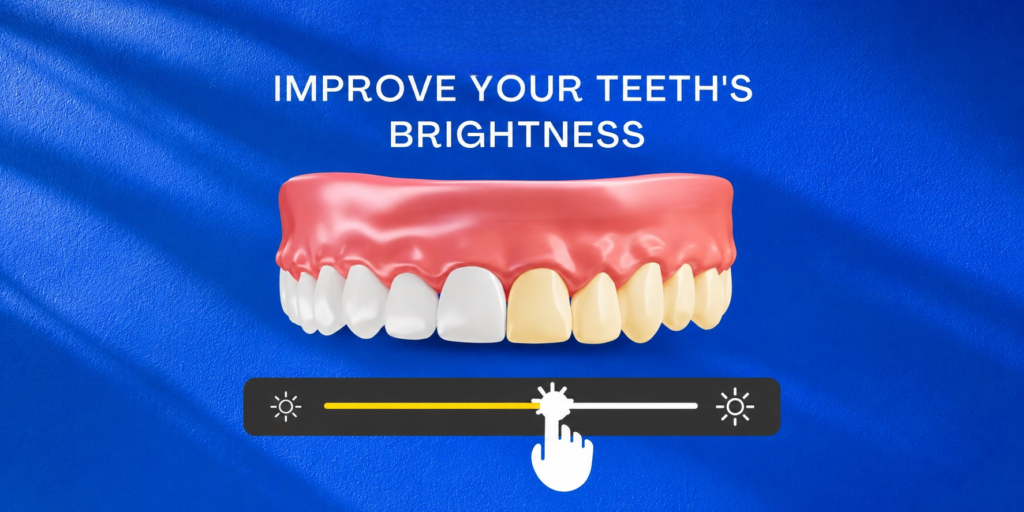
What Does Teeth Whitening Cost in Mohali? The teeth whitening cost in Mohali depends mainly on the method you choose. Laser teeth whitening done at a dental clinic is the higher-priced option because it involves professional-grade gel, special equipment and a dentist’s supervision. Home whitening kits cost much less upfront, but results are slower, milder and harder to control. The final whitening price at any clinic also depends on your starting tooth shade, the type of stains, and whether you need a cleaning before the procedure. The best way to know your exact figure is a short consultation, where the dentist checks your teeth and recommends the right whitening treatment. Why Teeth Whitening Cost in Mohali Varies So Much If you have searched for the whitening price in Mohali or compared it with teeth whitening in Chandigarh, you have probably noticed a wide gap between clinics. That gap is not random. These are the factors that actually move the price: A very low quoted price should always prompt a question: what gel concentration is being used, who is applying it, and how are your gums protected? Laser Teeth Whitening: How It Works Laser teeth whitening is a type of professional whitening performed in the dental chair. Here is the typical flow: Most people notice a visible change in a single sitting, which is why laser whitening is popular before weddings, interviews or special events. Pros and Cons of Laser Whitening Pros Cons Home Whitening Kits: What to Expect Home kits range from dentist-supplied trays with a controlled gel to store-bought strips, pens and toothpastes. They work more slowly, usually over one to several weeks of regular use. Types of home options Things to watch out for: ill-fitting generic trays can let gel touch the gums and cause irritation. Products with unclear ingredient lists are best avoided. If you have fillings, crowns or very sensitive teeth, ask a dentist before starting any kit. Laser vs Home Kits: Side-by-Side Comparison Factor Laser / Professional Whitening Home Whitening Kits Upfront cost Higher Lower Time to see results Same day, often in one visit Days to weeks Strength of results Stronger and more even Mild to moderate Supervision Dentist-controlled Self-managed (unless dentist-prescribed) Gum protection Professional barrier used Depends on tray fit and care Sensitivity risk Possible, managed by the dentist Possible, harder to manage alone Best for Quick, noticeable change Gradual lightening and touch-ups Long-term value Strong when followed by good aftercare Good for maintaining results Which Option Is Worth It for You? Choose professional laser whitening if: Choose a home kit if: Many patients combine both: a professional session first, then a dentist-guided touch-up kit to keep the result going. Is Professional Whitening Right for Everyone? Whitening works on natural tooth enamel. It is not always the right first step, and a dentist may recommend something different if you have: In cases of deep discolouration, options like veneers or smile designing may give a better outcome. You can read more on Veneers & Smile Designing in Mohali. How Long Do Whitening Results Last? Professional whitening results can last from several months to a couple of years, depending on your habits. Tea, coffee, red wine, tobacco and sugary drinks can bring stains back sooner. To keep your shade longer: Managing Sensitivity After Whitening Some people feel mild, short-lived sensitivity after whitening. It usually settles within a day or two. To stay comfortable: Teeth Whitening in Mohali vs Chandigarh: Does Location Matter? Mohali and Chandigarh are close enough that many patients compare clinics across both. The method, materials and dentist’s experience matter far more than the postal address. When comparing teeth whitening in Chandigarh with options in Mohali, check: If you are exploring other cosmetic and restorative care too, see the range of services at Expert Dental Solutions in Mohali. How to Get an Accurate Whitening Price Online figures can only ever be a rough guide. For a real quote: A clinic that explains all of this clearly is usually one you can trust with the procedure. Frequently Asked Questions What is the teeth whitening cost in Mohali? It depends on the method, your stain type and whether you need a cleaning first. Laser teeth whitening costs more than home kits because it uses professional materials and dentist supervision. A consultation gives you an exact quote. Is laser teeth whitening safe? When performed by a qualified dentist, laser teeth whitening is considered safe for most healthy adults. Your gums are protected during the procedure, and the dentist checks that whitening suits your teeth first. Temporary sensitivity is the most common side effect. Is laser whitening better than home kits? Laser whitening gives faster and more noticeable results in a single visit. Home kits are cheaper and gentler but slower. The better choice depends on your goals, timeline and how sensitive your teeth are. How long does laser teeth whitening take? A typical session takes around an hour, including cleaning, gum protection, gel application and the final shade check. How long do whitening results last? Results can last from several months to a couple of years. Diet, tobacco use and oral hygiene make the biggest difference. Does teeth whitening damage enamel? Professionally supervised whitening using the right products does not damage healthy enamel. Overusing strong, unregulated products can cause irritation and increase sensitivity. Can whitening change the colour of crowns, fillings or veneers? No. Whitening only works on natural tooth structure. If you have restorations on visible teeth, your dentist can suggest ways to match the shade. Is teeth whitening in Chandigarh cheaper than in Mohali? Prices vary clinic by clinic rather than by city. Compare the method, materials and aftercare along with the quote instead of choosing on price alone. Is whitening different from teeth cleaning? Yes. Cleaning removes plaque, tartar and surface stains. Whitening lightens the natural shade of the teeth. Many dentists recommend a cleaning before whitening for better results. Who should avoid teeth whitening? People with untreated cavities, gum problems, very
Best Dentist in Mohali: 7 Things to Check Before You Book

How Do You Find the Best Dentist in Mohali? The best dentist in Mohali is not the one with the loudest advertising. It is the one who is properly qualified, keeps a clean and safe clinic, explains your treatment clearly, uses modern diagnostics, and follows up after the procedure. Before you book, check these seven things: qualifications and experience, hygiene and sterilisation, technology, real patient reviews, range of treatments, transparency in planning, and aftercare. The 7-point checklist: Why Choosing the Right Dentist Matters Dental treatment is personal and often long-term. A filling, root canal, crown or implant can stay in your mouth for years, so the quality of the work and the planning behind it matter. A good dentist protects your natural teeth, avoids unnecessary procedures and tells you honestly what you need and what you do not. If you are searching for a dental clinic Mohali residents can trust, or typing dentist near me and facing dozens of options, a simple checklist makes the decision easier. Here is how to choose a dentist with confidence. 1. Check Qualifications and Experience Start with the basics. A dentist should hold a recognised dental degree and be registered with the relevant dental council. Ask or look for: Experience matters most for complex procedures. For something like an implant or a full smile makeover, it is reasonable to ask how many similar cases the dentist has handled and to see before-and-after examples. Red flag: vague answers about qualifications, or reluctance to share them. 2. Look at Hygiene and Sterilisation A clean clinic is non-negotiable. You can judge a lot in a single visit. Notice whether: Do not hesitate to ask about the clinic’s sterilisation process. A good clinic will be glad to explain it. Red flag: reused-looking tools, poor cleanliness or staff who avoid the question. 3. Ask About Technology and Diagnostics Modern equipment helps a dentist diagnose accurately and treat more comfortably. Depending on your needs, look for: Technology does not replace skill, but good tools combined with good training give more predictable results. 4. Read Genuine Patient Reviews This is where dental clinic reviews become useful, if you read them the right way. Real before-and-after photos and patient stories are also a good sign, as long as they are shared with consent. Red flag: only perfect, generic reviews, or no response to negative feedback. 5. Check the Range of Treatments Offered A clinic that handles many treatments under one roof saves you time and makes referrals easier. A well-rounded practice may offer: If you are comparing a top dentist Mohali has to offer, look at whether the clinic can handle your whole treatment journey or will refer you elsewhere for key steps. You can see an example of a full-service approach on the Expert Dental Solutions in Mohali page. 6. Expect Clear Communication and a Written Plan A good dentist explains, rather than pushes. During your first visit, you should feel comfortable asking questions and getting plain answers. Look for: Be cautious about any clinic that pressures you to start immediately, recommends a long list of treatments without showing evidence, or is unwilling to explain what each step does. Red flag: pressure tactics, unclear explanations or quotes that are not itemised. 7. Ask About Aftercare and Follow-Up Good dentistry does not end when you leave the chair. Before you book, ask: For longer treatments such as implants or orthodontics, ongoing review is a big part of long-term success. Good Clinic vs Clinic to Think Twice About What to Check Good Sign Warning Sign Qualifications Clearly shared and verifiable Vague or avoided Hygiene Sealed instruments, clean surroundings Visible lapses, no clear process Technology Digital X-rays, 3D scans where needed Diagnosis without proper imaging Reviews Detailed, varied, genuine Identical or suspiciously perfect Treatment advice Options explained, evidence shown Pressure to start immediately Plan Written and itemised Verbal only, unclear Aftercare Follow-up and emergency contact provided No clear support afterwards Special Situations: Questions to Ask by Treatment If You Need a Dental Implant Ask about the implant brand, whether a 3D scan is used for planning, how bone quality is assessed and what the follow-up schedule looks like. Learn more on the Dental Implants in Mohali page. If You Need a Root Canal Ask how the tooth will be restored afterwards, how many visits are expected and how comfort is managed during the procedure. If You Want Cosmetic Work Ask to see previous cases and whether a preview or smile design is offered. Details are on the Veneers & Smile Designing in Mohali page. If You Are Booking for a Child Look for a dentist who is patient with children and offers gentle options for anxious kids. See the Pediatric Dentistry with Conscious Sedation page for an example. Practical Tips Before Your First Appointment Finding the Right Clinic Near You in Mohali When you search best dentist in Mohali or dentist near me, convenience matters, but it should not be the only factor. A clinic that is easy to reach is helpful for follow-up visits, yet quality of diagnosis, hygiene and communication should come first. At TrueSmilez, we begin with a careful examination, explain your options plainly and make sure you understand each step before treatment starts. Our aim is to help you make an informed choice, whether you visit us or any other clinic. Frequently Asked Questions How do I choose the best dentist in Mohali? Check qualifications, hygiene, technology, patient reviews, treatment range, communication and aftercare. Visiting the clinic and asking questions in person is the best way to judge these. How can I tell if a dental clinic is hygienic? Look for sealed sterilised instruments, fresh gloves and masks for every patient, clean surfaces and single-use disposables. You can also ask the clinic to explain its sterilisation process. Are online dental clinic reviews reliable? They are helpful when read carefully. Focus on detailed reviews across multiple platforms and look for consistent comments about communication, comfort and results. Be wary of
Same-Day Dental Implants: Are They Really Possible?
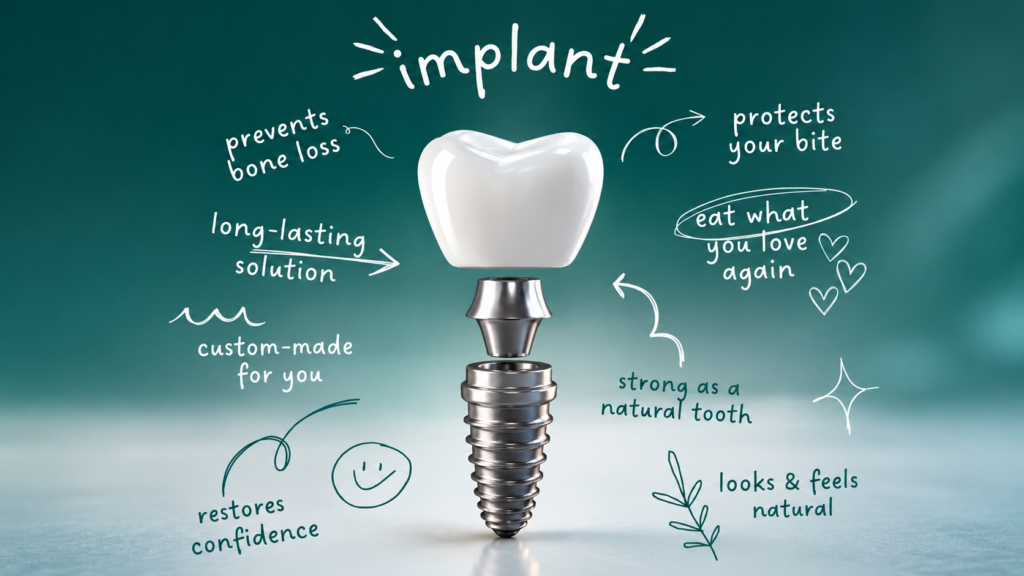
Are Same-Day Dental Implants Really Possible? Yes, same day dental implants are possible, but only for the right patients. In a same-day procedure, the implant is placed in the jawbone and a temporary tooth or set of teeth is fitted on the same visit. The implant still needs a few months to fuse with the bone before the final tooth is placed. Whether you qualify depends on your bone quality, gum health, bite and how stable the implant feels at the time of surgery. In short: What Does “Same-Day Dental Implants” Actually Mean? The phrase is used loosely, so it helps to separate the ideas involved. Immediate Implants (Placement Right After Extraction) Immediate implants are placed in the same appointment in which a damaged tooth is removed. The implant goes into the fresh socket instead of waiting months for the area to heal first. This can shorten the overall treatment time and help preserve the shape of the gum and bone. Immediate Loading (Teeth on the Implant the Same Day) Implant loading means attaching a tooth or bridge to the implant. With immediate loading, a temporary crown or bridge is fitted on the same day, so you leave the clinic with a tooth in place. This is the part most people mean by teeth in a day. Teeth in a Day for Full Arches For patients missing many or all teeth, a full set of temporary fixed teeth can be placed on a small number of implants during one visit. This is often done with techniques such as All-on-4, where a few strategically placed implants support an entire arch. What It Does Not Mean Same-day treatment does not mean the whole process is finished in one day. The temporary teeth are a bridge to the final result. The final crown or prosthesis is made after the implant has healed. How Do Same-Day Dental Implants Work? The steps vary by case, but the general flow looks like this. Who Is a Good Candidate for Same-Day Implants? Same-day treatment works best when the conditions in your mouth support it. Dentists generally look for: Your general health also matters. If you have any ongoing health conditions or take regular medication, share this with your dentist so the plan can be made safely. When Same-Day Implants May Not Be Suitable A staged approach, where the implant heals first and teeth are added later, may be recommended if you have: Choosing the slower route in these cases is not a downgrade. It is often the way to protect the long-term success of the implant. Same-Day Implants vs Traditional (Delayed) Implants Feature Same-Day Implants Traditional Implants Temporary tooth on surgery day Yes, in suitable cases Usually no Number of surgical stages Often fewer Often more Overall treatment time Can feel shorter Longer waiting phases Healing before final tooth Still required Still required Suitable for everyone No, depends on bone and stability Wider range of cases Appearance during healing Teeth in place from day one Gap may remain during healing Careful diet needed Yes, soft foods early on Yes, depending on stage Both approaches aim for the same result: a strong, natural-looking, long-lasting tooth. The difference is the route taken to get there. Benefits of Same-Day Dental Implants Risks and Limitations to Know About Honest planning matters here. Same-day treatment is a good option for the right case, but it carries points to consider: A good clinic will tell you plainly if same-day treatment is not the best option for you. What to Expect After Same-Day Implant Surgery First Few Days Some swelling, mild discomfort and slight bleeding are common and are usually managed with prescribed medication and cold compresses. First Few Weeks Healing Phase Over the next few months, the implant fuses with the bone. Your dentist will confirm when it is ready for the final tooth. Final Teeth Once healing is complete, the permanent crown or bridge is fitted and the bite is checked and adjusted. Tips for Successful Same-Day Implant Results Choosing an Implant Clinic in Mohali If you are looking for an implant clinic Mohali patients can rely on, look for clear communication, careful diagnosis and a willingness to recommend the approach that suits your mouth rather than the fastest one. Ask to see a written plan, understand which steps are temporary and which are final, and check how follow-up care is handled. At TrueSmilez, every implant case begins with a thorough evaluation so you know your options, the reasoning behind them and what to expect at each stage. Learn more on our Dental Implants in Mohali page, or see the full range of care on the Expert Dental Solutions in Mohali page. Frequently Asked Questions Are same day dental implants really possible? Yes, in suitable cases. The implant is placed and a temporary tooth is fitted on the same day. The final tooth is added after the implant has healed and bonded with the bone. Do I get my permanent teeth on the same day? No. What you receive on the day is a temporary crown or bridge. The permanent restoration is made once healing is complete. What is the difference between immediate implants and immediate loading? Immediate implants are placed right after a tooth is extracted. Immediate loading means a tooth is attached to the implant on the same day. They can be done together or separately, depending on your case. Is same-day implant surgery painful? The procedure is done under anaesthesia, so you should not feel pain during surgery. Mild soreness and swelling afterwards are normal and are usually controlled with prescribed medication. How long does the full process take? The surgery and temporary tooth can be completed in one visit, but the full process includes a healing period of a few months before the final tooth. Your dentist will give you a timeline based on your case. Can everyone get teeth in a day? No. You need enough healthy bone, a stable implant and healthy gums. If these
Full Mouth Dental Implants Cost in India: What Affects Price?
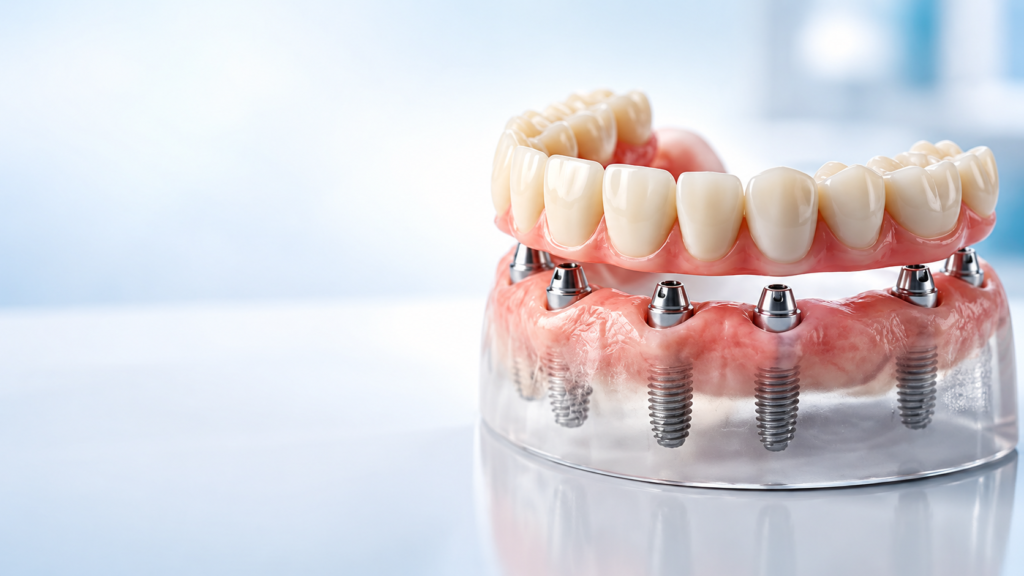
What Decides Full Mouth Dental Implants Cost? The full mouth dental implants cost in India depends on how many implants you need, the type of implant system, the material of the final teeth, whether bone grafting is required, and the experience of the implant team. There is no single fixed price, because a full mouth plan is built around your jaw, your bite and your goals. The most reliable way to know your exact figure is a 3D scan and a written treatment plan from your dentist. In short: What Are Full Mouth Dental Implants? Full mouth dental implants are a permanent way to replace an entire set of teeth. Small titanium or zirconia posts are placed in the jawbone and act as artificial roots. A custom-made set of teeth is then fixed on top of them. Unlike removable dentures, they do not slip, do not need adhesives and help preserve the jawbone. This is why many people who have lost most or all of their teeth look at full mouth rehabilitation with implants rather than traditional dentures. A full mouth plan can mean: Types of Full Mouth Implant Treatment The treatment type is one of the biggest drivers of price, so it helps to understand your options. All-on-4 Implants All-on-4 implants use four strategically angled implants per jaw to support a full arch of teeth. Because the back implants are tilted, the technique can often make use of the bone you already have and may reduce the need for grafting. Many patients receive a fixed temporary set of teeth soon after surgery, followed by the final set once healing is complete. Best for: patients with enough front jawbone who want fewer implants and a faster route to fixed teeth. Full Arch Implants (Six or More per Jaw) Full arch implants use a higher number of implants, commonly six or more per jaw, to support the bridge. More implants spread the chewing load across more points, which some dentists prefer for stronger bite forces or when bone quality varies across the jaw. Best for: patients who need extra support, have stronger bite force, or whose jawbone suits a greater number of implants. Implant-Supported Overdentures Here, a removable denture clicks onto a small number of implants. It is more stable than a regular denture and is easier to clean, but it is not fixed in the mouth. Best for: patients who want improved stability and may prefer a removable option. Full Mouth Rehabilitation Full mouth rehabilitation is a broader approach that rebuilds both function and appearance. It can combine implants, crowns, bridges, gum care and bite correction in one planned sequence. If your teeth are worn, broken or missing in different areas, this is usually the route your dentist will discuss. Factors That Affect Full Mouth Dental Implants Cost in India When people search for implant price India, they often find wide ranges. These are the reasons the numbers differ so much. 1. Number of Implants Needed More implants generally mean a higher total. An All-on-4 plan uses fewer implants per jaw than a full arch plan with six or more, so the implant count alone changes the quote. 2. Implant Brand and Material Implant systems vary in design, research background and surface technology. Premium internationally recognised systems usually cost more than basic ones. Titanium is the most widely used material, while zirconia is an alternative for patients who prefer a metal-free option. 3. Type of Final Teeth (Prosthesis) The teeth that sit on top of the implants can be made from different materials, such as acrylic with a reinforced frame, or full zirconia. Zirconia is usually more durable and natural looking, and it is often priced higher. 4. Condition of Your Jawbone Implants need enough healthy bone to hold them. If the bone has shrunk after long-term tooth loss, you may need: These add steps, healing time and cost. 5. Extractions and Pre-Treatment If damaged teeth remain, they may need to be removed first. Gum treatment, cleaning or treating infection before surgery are also included in some plans. 6. Diagnostics and Planning A CBCT 3D scan, digital smile planning and surgical guides improve accuracy and safety. Clinics that invest in digital planning may price this into the treatment, but it often leads to more predictable results. 7. Sedation or Anaesthesia Local anaesthesia is standard. If you prefer sedation for comfort, it will be added to the plan. 8. Experience of the Dentist and Clinic Setup Full mouth implant surgery is technique-sensitive. An experienced implant dentist, a sterile operating environment and proper follow-up all contribute to long-term success, and they are part of what you pay for. 9. Number of Visits and Aftercare A good plan includes review visits, adjustments and maintenance guidance. Ask whether these are included or billed separately. 10. City and Clinic Location Costs differ between metro cities and smaller cities. This is one reason many patients compare options in nearby cities, including implants Mohali, before deciding. Cost Factors at a Glance Factor How It Affects Cost Number of implants More implants usually increase the total Treatment type All-on-4 and full arch plans are structured differently Implant brand Premium systems typically cost more Final teeth material Zirconia usually costs more than acrylic-based options Bone condition Grafting or sinus lift adds steps and expense Pre-treatment Extractions, gum care and infection control are extra Diagnostics 3D scan and guided surgery add precision Sedation Optional, added to the plan Clinician experience Experienced teams generally reflect in the quote Location City and clinic setup influence pricing All-on-4 vs Full Arch Implants: Which Is Better? Neither is better for everyone. The right choice depends on your bone, bite and budget. Feature All-on-4 Implants Full Arch Implants (6+) Implants per jaw 4 6 or more Bone grafting need Often reduced May be needed in some cases Support for the bridge Good for suitable cases Wider load distribution Surgery complexity Shorter and simpler for many patients Can involve more placement sites Best for Patients
Is Dental Implant Surgery Painful? Step-by-Step Process
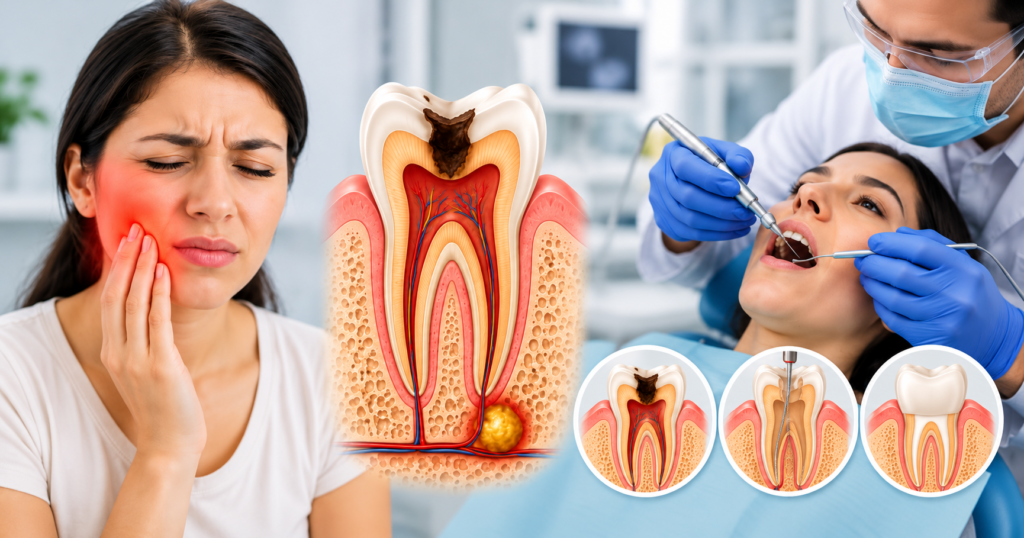
Is a Dental Implant Painful? No, a dental implant is not painful during the procedure because it is done under local anesthesia, so the area is completely numb. You may feel pressure or vibration but not sharp pain. After the anesthesia wears off, mild to moderate soreness, swelling, and tenderness are normal for a few days and can usually be managed with medication prescribed by your dentist. Many patients say it is easier than they expected. Key Takeaways Is Dental Implant Surgery Painful? What Patients Actually Feel The fear of pain is the number one reason people delay implants. Here is what the experience is usually like. During the procedure: Your dentist numbs the area with local anesthesia before starting. Because the jawbone itself has few pain-sensing nerves and the area is numb, you should not feel pain. Most people describe the sensation as pressure, tugging, or vibration, similar to a tooth extraction or a filling. After the procedure: When the numbness fades after a few hours, you may feel: This discomfort is generally comparable to, or milder than, what many people feel after a tooth extraction. Your dentist will prescribe medication to keep you comfortable. Pain experience differs from person to person and depends on the number of implants, bone condition, and whether grafting or extraction is done at the same time. Dental Implant Procedure: Step-by-Step Process Understanding each stage of the implant procedure can reduce anxiety. Here are the typical implant surgery steps. Step 1: Consultation, Examination, and 3D Scan Your dentist checks your teeth, gums, and general health, and takes X-rays or a 3D scan to measure bone height and width. This is when the treatment plan, number of implants, and timeline are decided. No pain is involved. Step 2: Preparing the Mouth If you have a damaged tooth, it may need to be removed. If the bone is thin, a bone graft may be advised first, which adds healing time. Gum problems are treated before surgery. Step 3: Anesthesia The area is numbed with local anesthesia. A numbing gel may be used first so even the injection is comfortable. Sedation may be discussed for anxious patients. Step 4: Implant Placement A small opening is made in the gum, and a titanium implant is placed into the jawbone. A single implant often takes around an hour or less, though this depends on the case. The gum is then closed over or around the implant. Step 5: Healing and Osseointegration Over the next few months, the jawbone grows around the implant and bonds with it. This process, called osseointegration, is what makes the implant strong and stable. A temporary tooth may be provided where appropriate. Step 6: Abutment Placement Once the implant has integrated, a small connector called an abutment is attached. This is usually a quick and minor step, often done with minimal discomfort. Step 7: Crown Placement An impression or digital scan is taken, and your custom crown is made to match your natural teeth. Once fitted, you can chew, smile, and speak with confidence. Step 8: Follow-Up Visits Regular check-ups make sure the implant and gums remain healthy for the long term. Implant Recovery Time: What to Expect The implant recovery time has two parts: early soft-tissue recovery and long-term bone healing. Timeline What to expect Day 1 Numbness wears off; soreness and minor oozing are common Days 2 to 3 Swelling and tenderness usually peak, then begin to ease Days 4 to 7 Discomfort reduces significantly; most people return to normal routines Weeks 1 to 2 Gums settle; stitches are removed or dissolve, as advised Months 3 to 6 Bone fuses with the implant; the final crown is usually fitted after this These are general timelines. Healing is slower if bone grafting is done or if multiple implants are placed. Your dentist will guide you based on your case. Implant Healing: Tips for a Smooth, Comfortable Recovery Good care in the first days supports faster implant healing and lowers the risk of complications. When Should You Call Your Dentist? Some soreness is normal, but contact your dentist if you notice: Early attention usually keeps small problems small. How to Make Implant Surgery More Comfortable Choosing an Implant Dentist in Mohali A good implant dentist in Mohali should offer a clear diagnosis with scans, explain the full procedure and timeline, use quality implant systems, follow strict sterilisation, and provide proper aftercare. Do not hesitate to ask about experience, the materials used, and what is included in the treatment plan. At TrueSmilez, our team focuses on comfortable, carefully planned implant treatment, so you know what to expect before you begin. Learn more on our Dental Implants in Mohali page or explore our Expert Dental Solutions in Mohali. Planning your budget? Read Dental Implant Cost in Mohali (add internal link), and to see how long results last, read How Long Do Dental Implants Last? (add internal link). Worried about pain? Book a consultation at TrueSmilez, Mohali and talk through your comfort options before you decide. Frequently Asked Questions Is a dental implant painful? The procedure itself is not painful because the area is numbed with local anesthesia. You may feel pressure but not sharp pain. Mild soreness and swelling afterwards are normal and usually improve within a few days. Is dental implant surgery more painful than a tooth extraction? Most patients report that implant surgery feels similar to or milder than a tooth extraction, though this varies. Complex cases with grafting may involve a little more discomfort during recovery. How long does pain last after a dental implant? Discomfort usually peaks in the first two to three days and then settles over about a week. If pain gets worse instead of better, see your dentist. How long is the implant recovery time? Gums typically heal in one to two weeks, and most people resume normal activities within a few days. Full bone healing around the implant takes around three to six months, sometimes longer. Can I
How Long Do Dental Implants Last? Lifespan & Care Tips
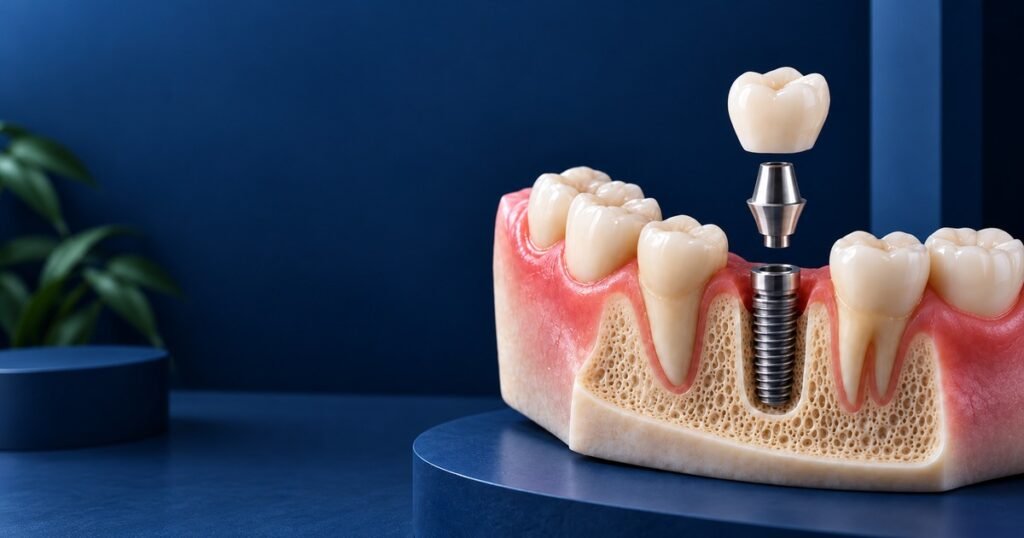
How Long Do Dental Implants Last? Dental implants can last 15 to 25 years or more, and the titanium post itself often lasts a lifetime with good oral hygiene and regular check-ups. The crown fitted on top usually lasts around 10 to 15 years before it may need replacement due to normal wear. Smoking, gum disease, teeth grinding, and poor cleaning are the biggest factors that shorten implant lifespan. Key Takeaways What Is the Average Implant Lifespan? The implant lifespan depends on which part you are talking about. A dental implant has three components, and each one ages differently. Component What it is Typical lifespan Implant post Titanium screw placed in the jawbone Often 25 years to lifelong Abutment Connector between the post and the crown Usually long-lasting; replaced if worn or damaged Crown The visible tooth-shaped cap Around 10 to 15 years, sometimes longer These are general ranges, not guarantees. Your bone quality, gum health, habits, and the quality of the treatment all influence how long your implant stays healthy. Why Can Implants Last So Long? A dental implant bonds directly with your jawbone through a process called osseointegration. Titanium is biocompatible, so the bone grows around the post and holds it firmly in place. Unlike natural teeth, an implant cannot get cavities. That is why the post can outlast other dental restorations like bridges and dentures. However, the gum and bone around the implant can still get infected, and this is where long-term care matters most. If you are still comparing options, see our guide to Dental Implants vs Dentures: Honest Comparison for 2026 (add internal link). Implant Success Rate: How Reliable Are Implants? The implant success rate is widely reported to be high, commonly above 95% over the long term when treatment is done properly and patients maintain good hygiene. Success generally means the implant is stable, painless, free from infection, and functioning well. Success rates tend to be higher when: No medical treatment can be guaranteed 100%, and your dentist can explain your individual outlook after an examination. Factors That Affect How Long Your Implants Last Implant Failure: Causes and Warning Signs Implant failure is not common, but it helps to know what causes it and how to spot it early. Main causes of implant failure Warning signs to watch for If you notice any of these, contact your dentist promptly. Caught early, most problems can be treated and the implant saved. Implant Maintenance: Daily and Long-Term Habits Good implant maintenance is very similar to caring for natural teeth, with a bit more attention around the gum line. Dental Implant Care Tips After Surgery Proper dental implant care in the first few weeks protects healing and long-term success. Once healed, avoid chewing ice, hard candy, or using your teeth to open packets, as these can crack the crown. Can Implants Last a Lifetime? The implant post can, in many cases, last a lifetime. The crown, however, is subject to normal wear and may need replacement. This is still much longer than most dentures or bridges, which typically need replacing more often. Think of an implant as a long-term investment that rewards consistent care. Dental Implants in Mohali at TrueSmilez At TrueSmilez, every implant case starts with a detailed examination, scan, and personalised plan so that your implant is positioned for long-term success. We also guide you on aftercare so you know exactly how to protect your investment. Learn more on our Dental Implants in Mohali page or explore our Expert Dental Solutions in Mohali. To understand what affects the price, read Dental Implant Cost in Mohali (add internal link). Planning an implant or worried about an existing one? Book a consultation at TrueSmilez, Mohali. Frequently Asked Questions How long do dental implants last on average? The implant post often lasts 25 years or more, and in many cases for life. The crown usually lasts about 10 to 15 years before it may need replacing from normal wear. Do dental implants need to be replaced? The implant post usually does not need replacement if it stays healthy. The crown may need to be replaced after a decade or more, and the abutment may be changed if it is worn or damaged. What is the implant success rate? The implant success rate is widely reported to be above 95% over the long term in healthy patients with good hygiene. Your individual outcome depends on bone, gum health, and habits. What are the main causes of implant failure? The most common causes are infection around the implant (peri-implantitis), poor bone bonding, smoking, teeth grinding, and inadequate cleaning. Regular check-ups reduce the risk. How do I know if my implant is failing? Signs include pain, swelling, bleeding gums, a loose crown or implant, bad taste, and receding gums around the implant. Visit your dentist as soon as you notice these. How do I take care of my dental implants? Brush twice daily, clean between your teeth every day, avoid tobacco, wear a night guard if you grind your teeth, and visit your dentist every six months. Can a failed implant be redone? Often yes. Once the area has healed and any infection or bone loss is treated, a new implant can frequently be placed. Your dentist will assess this with a scan. Does smoking really affect implant lifespan? Yes. Smoking reduces blood supply and healing, and increases the risk of infection and implant failure. Quitting greatly improves long-term outcomes.
Dental Implants vs Dentures: Honest Comparison for 2026
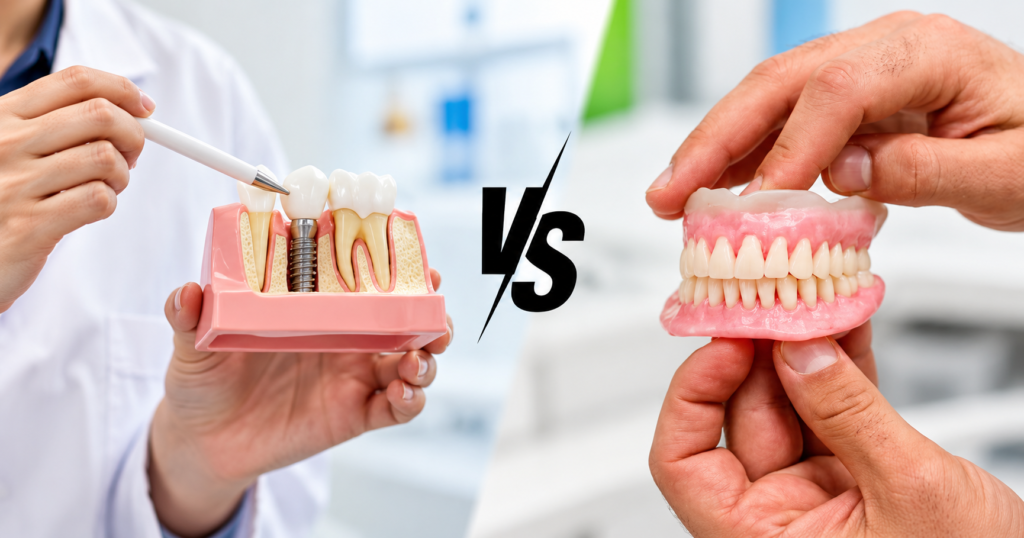
Dental Implants or Dentures? Dental implants are a long-term, fixed solution that replace the tooth root and protect jawbone, while dentures are a removable, lower upfront-cost option that rest on the gums. If you want permanent teeth that feel and function closest to natural ones, implants are usually the better investment. If budget, health, or time is a constraint, dentures or implant dentures can be a practical middle path. Key Takeaways What Are Dental Implants and Dentures? Dental implants are small biocompatible posts, usually made of titanium, placed in the jawbone to act as artificial tooth roots. Over a few months the bone bonds with the post (a process called osseointegration). A crown, bridge, or denture is then attached on top, so the new tooth is fixed in place and does not move when you eat or speak. Dentures are removable false teeth made of acrylic, sometimes with a metal framework. A complete (full) denture replaces all teeth in an arch. A partial denture replaces a few missing teeth and clips onto the remaining natural ones. Both rest on your gums and are taken out for cleaning. If you are comparing implants with other fixed options such as bridges, read our guide on Dental Implants vs Bridges: Which Is Better for Missing Teeth? (add internal link). Dental Implants vs Dentures: Side-by-Side Comparison Factor Dental Implants Dentures How they stay in Fixed into jawbone Rest on gums (adhesive or suction) Feel Closest to natural teeth Can feel bulky; may shift Chewing strength Very strong, near natural Reduced, especially with hard or sticky food Jawbone Helps preserve bone Bone can shrink over time Upfront cost Higher Lower Long-term cost Often lower per year of use Relines, repairs, and replacements add up Typical lifespan Many years, often decades with care Usually need replacing or relining every 5 to 8 years Treatment time Several months Few weeks Daily care Brush and floss like natural teeth Remove, soak, and clean daily Surgery needed Yes, minor surgical procedure No Dentures Cost vs Implant Cost: What You Really Pay When people search for dentures cost, they usually find that dentures are cheaper at the start. That is true. But the full picture over 10 to 20 years is different. Dentures have a lower upfront price, but you should plan for: Dental implants cost more on day one because they involve surgery, a titanium post, an abutment, and a crown. But a well-maintained implant does not need frequent replacement, so the cost spread across the years can be competitive. The final price for either option depends on the number of teeth, the materials, whether bone grafting is needed, and the clinic’s technology. At TrueSmilez we give a written treatment plan after your examination so there are no surprises. You can see how implant treatment works on our Dental Implants in Mohali page. Comfort, Eating, and Speaking With implants, you can bite into an apple, chew roti or meat, and talk without worrying that your teeth will slip. Because the implant is fixed, pressure goes into the bone just like it does with natural roots. With dentures, most people adapt within a few weeks, but common complaints include: If stability and confidence in everyday eating matter to you, implants clearly have the edge. Jawbone Health: The Hidden Difference Your jawbone stays strong because chewing pressure travels through tooth roots into the bone. When a tooth is lost, that stimulation stops and the bone in that area slowly begins to shrink. This is one of the strongest reasons dentists recommend replacing missing teeth with implants where possible. Implant Dentures: The Best of Both Worlds? Implant dentures (also called implant-supported or implant-retained dentures) are a denture that clips or locks onto a small number of dental implants. Instead of replacing every tooth with its own implant, a few strategically placed implants hold the whole arch. Benefits of implant dentures: They are a popular choice for patients who are tired of loose dentures but do not want, or cannot afford, a full set of individual implants. Full Mouth Implants: When Do They Make Sense? Full mouth implants (also called full-arch or full mouth rehabilitation with implants) replace all teeth in the upper jaw, lower jaw, or both, using a set of implants that support a fixed bridge. Unlike dentures, this bridge is not removed by the patient. Full mouth implants may suit you if: This is a bigger, longer treatment, so a detailed scan, bone assessment, and treatment plan come first. Permanent Teeth: How Long Do They Last? People searching for permanent teeth usually want a solution they will not have to think about every day. Here is the honest picture: No dental treatment is guaranteed forever. Implant success rates are widely reported to be high, but results depend on bone quality, gum health, habits, and aftercare. Denture Alternatives: Other Options to Consider If you are exploring denture alternatives, these are the main choices: A dentist will recommend the most suitable one after checking your teeth, gums, and jawbone. Who Should Choose Implants, and Who Should Choose Dentures? Implants are usually a better fit if you: Dentures may be a better fit if you: Smokers and people with untreated gum disease have a higher risk of implant complications, so these issues should be addressed first. What to Expect: Implant Process vs Denture Process Dental implants (typical steps): Dentures (typical steps): Implants take longer, but patients commonly report much better comfort once treatment is complete. Dental Implants in Mohali at TrueSmilez At TrueSmilez, our team plans every case individually. We examine your gums, bone, and bite, explain all your options clearly (including dentures and implant dentures), and recommend only what suits your needs and budget. You can explore our Expert Dental Solutions in Mohali or go straight to Dental Implants in Mohali to learn more. Ready to decide? Book a consultation at TrueSmilez, Mohali, and get a personalised treatment plan. Frequently Asked Questions Are dental implants better than dentures? For most patients