


Root Canal vs Tooth Extraction: Which Treatment Is Better for a Damaged Tooth?
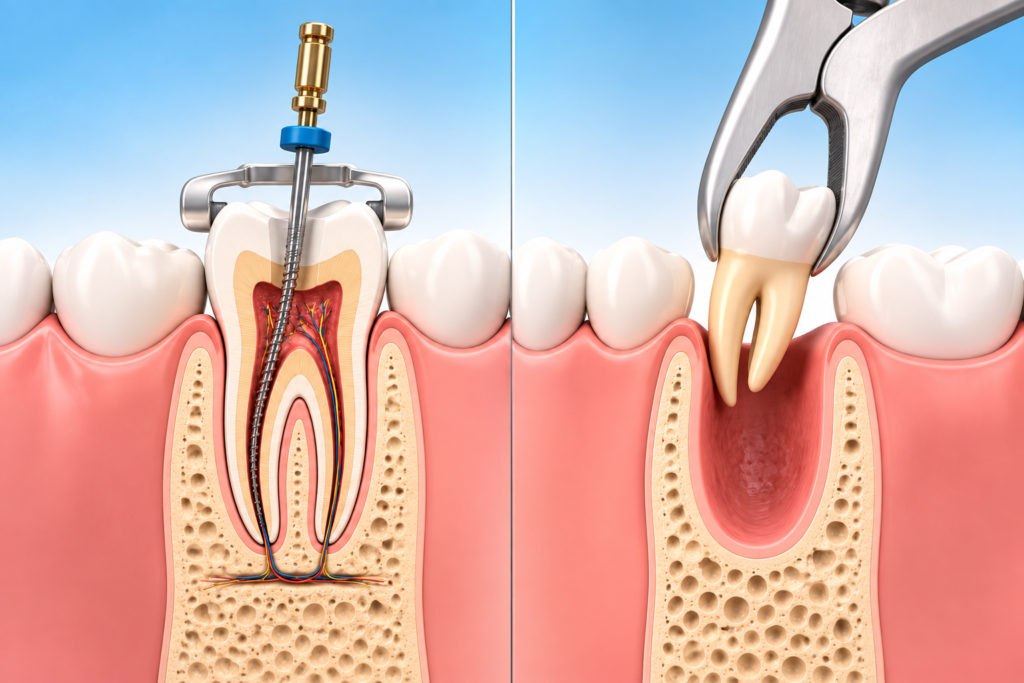
A damaged or infected tooth almost always brings up the same question at the dentist’s chair: should you save it with a root canal, or is it simpler to just get it removed? Both are common, effective treatments, but they solve the problem in very different ways. This guide breaks down root canal vs tooth extraction so you know what to expect from each, when one is preferred over the other, and how to decide with your dentist. What Is a Root Canal? A root canal treatment removes infected or damaged pulp (the soft tissue inside a tooth) while preserving the natural tooth structure. Once the infection is cleared, the space inside is cleaned, shaped, filled and sealed, and a crown is usually placed on top to restore strength and function. The goal is simple: save your natural tooth rather than remove it. What Is a Tooth Extraction? A tooth extraction is the complete removal of a tooth from its socket. It’s typically recommended when a tooth is too damaged, decayed or infected to be saved, or when it’s causing problems like overcrowding or impaction (as with wisdom teeth). After extraction, the gap is usually filled with a replacement option like a dental implant, bridge or denture to maintain proper chewing function and prevent nearby teeth from shifting. Root Canal vs Tooth Extraction: Key Differences Aspect Root Canal Tooth Extraction What happens Infected pulp removed, tooth preserved Entire tooth removed Natural tooth Retained Lost, may need replacement Procedure time One or more longer sittings Usually quicker Recovery Mild soreness for a few days Slightly longer healing at the socket Long-term outcome Functions like a natural tooth with a crown Requires an implant, bridge or denture to restore chewing Cost over time Higher upfront, but often more economical long-term Lower upfront, but replacement adds to total cost Signs You May Need a Root Canal You might need root canal treatment if you notice: If you’re experiencing any tooth pain treatment concerns like these, it’s worth getting examined before deciding between saving or removing the tooth. When Is Extraction the Better Option? Extraction is generally recommended when: Your dentist will usually take an X-ray to assess how much healthy structure remains before recommending either path. Root Canal or Extraction: How Dentists Decide When you ask “should I get a root canal or extraction,” dentists typically weigh: In most cases, dentists prefer to save a natural tooth wherever possible, since nothing fully replicates its function. Extraction is considered when saving the tooth isn’t realistic or would fail again soon after. Root Canal Treatment Cost vs Extraction Cost Root canal treatment cost typically includes the procedure itself plus a crown afterward, since the tooth needs added strength once the pulp is removed. Extraction is usually cheaper as a standalone procedure, but if the missing tooth is replaced with an implant, bridge or denture, the combined cost can end up higher than a root canal. It helps to think of the decision as: root canal cost = treatment + crown, versus extraction cost = removal + eventual replacement (if needed). Ask your dentist for a full breakdown of both paths before deciding. Recovery: What to Expect After a Root Canal After an Extraction Why Saving Your Natural Tooth Usually Matters Whenever it’s a viable option, keeping your natural tooth through a root canal has real advantages: That said, a well-planned extraction followed by a suitable replacement can also restore full function — it simply involves an extra step. Frequently Asked Questions 1. Is a root canal more painful than an extraction?Both are typically done under local anaesthesia, so pain during the procedure is minimal. Post-procedure discomfort is usually mild for both, though recovery patterns differ slightly. 2. Can every damaged tooth be saved with a root canal?No. If the damage extends below the gumline, if there’s insufficient healthy structure, or if the surrounding bone is compromised, extraction may be the only realistic option. 3. Is tooth extraction cheaper than a root canal in the long run?Not always. Extraction is often cheaper upfront, but if you need a replacement like an implant or bridge afterward, the total cost can exceed that of a root canal with a crown. 4. What happens if I don’t replace an extracted tooth?Neighbouring teeth can shift, your bite can change, and jawbone loss can occur over time. Most dentists recommend some form of replacement. 5. How do I know if I need a root canal or extraction?Only a dental examination with an X-ray can confirm this. Signs like persistent pain, swelling or sensitivity mean it’s time to get checked rather than guess. 6. Does a root canal weaken the tooth?A root canal removes the pulp but not the outer tooth structure. A crown is placed afterward to restore strength, so the tooth remains functional for years. Final Thoughts There’s no universal answer to root canal vs tooth extraction — it depends entirely on the condition of your tooth, the surrounding bone and your dentist’s clinical assessment. Where a tooth can realistically be saved, a root canal is usually the preferred route. Where the damage is too extensive, extraction followed by a proper replacement is the better long-term choice.
Best Foods for Strong Teeth and Gums

Maintaining strong teeth and healthy gums requires more than just daily brushing and flossing—it begins with the foods we eat. The right nutrition provides essential minerals and vitamins that support oral health, fight plaque buildup, and reduce the risk of gum disease. Below, we explore the top foods that strengthen your teeth and gums, backed by science and proven to promote a healthier smile. If you are already working with the best dentist or an ISO Certified Expert Dental professional, pairing expert care with the right diet will give you maximum results. Dairy Products: Calcium and Phosphorus Powerhouses Dairy foods such as milk, cheese, and yogurt are rich in calcium and phosphorus, both vital for strengthening enamel and keeping teeth resistant to decay. Even the best dentist will recommend including dairy in your diet to reinforce your dental treatments naturally. Leafy Greens: Vitamin-Rich Gum Protectors Leafy greens such as spinach, kale, and collard greens are excellent for oral health because they contain high amounts of calcium, folic acid, and antioxidants. Your ISO Certified Expert Dental provider may also highlight folic acid’s role in reducing gum sensitivity, making leafy greens a must-have in your diet. Crunchy Fruits and Vegetables: Natural Toothbrushes Crisp fruits and vegetables like apples, carrots, celery, and cucumbers act as natural toothbrushes by scrubbing plaque from the surface of teeth while stimulating saliva production. These foods are recommended by the best dentist to keep teeth naturally polished between check-ups. Fatty Fish and Omega-3 Sources: Gum Disease Defenders Fish such as salmon, mackerel, and sardines are rich in omega-3 fatty acids and vitamin D, both critical for oral health. An ISO Certified Expert Dental professional often emphasizes omega-3 intake as part of a comprehensive gum care plan. Nuts and Seeds: Mineral Boosters for Teeth Nuts and seeds such as almonds, walnuts, and sesame seeds provide a dense supply of minerals including calcium, phosphorus, and magnesium. Both the best dentist and dietary experts agree that adding nuts to your daily meals supports lasting oral health. Green and Black Tea: Plaque Fighters Tea—especially green and black varieties—contains polyphenols that inhibit the growth of bacteria responsible for cavities and gum disease. Your ISO Certified Expert Dental care in Mohali provider may recommend tea as a natural addition to oral care for gum protection. Citrus Fruits and Vitamin C Sources: Gum Health Essentials Foods rich in vitamin C—such as oranges, strawberries, and kiwi—are crucial for strong gums and connective tissues. Even the best dentist will emphasize vitamin C intake to keep gums strong and resistant to infections. Whole Grains: Gum-Friendly Carbohydrates Refined carbohydrates often contribute to plaque buildup, but whole grains are different. Foods like brown rice, quinoa, and whole wheat bread are beneficial because they are rich in fiber, iron, and B vitamins. Choosing whole grains is an approach recommended by the best dentist for a gum-friendly, cavity-preventive diet. Garlic and Onions: Natural Antibacterial Agents Though not the most breath-friendly foods, garlic and onions contain natural antibacterial compounds that fight harmful bacteria in the mouth. An ISO Certified Expert Dental clinic may recommend garlic and onion consumption as part of a holistic oral care strategy. Water: The Ultimate Oral Cleanser Among all foods and drinks, water remains the most important for oral health. Staying hydrated ensures constant saliva flow, which is the body’s natural defense against tooth decay. The best dentist will always remind patients that water is the simplest, most effective oral cleanser. Conclusion: A Nutrient-Rich Diet for a Healthy Smile The foods for strong teeth and gums depends largely on the nutrients we consume. By prioritizing calcium-rich dairy, leafy greens, crunchy fruits and vegetables, omega-3-packed fish, nuts, tea, vitamin C sources, whole grains, antibacterial foods, and plenty of water, we provide our mouths with the essential tools to stay healthy and resilient. Combining these foods with regular visits to the best dentist or an ISO Certified Expert Dental provider ensures long-term protection against cavities, gum disease, and enamel erosion. The foods we choose daily are not just fuel for our bodies—they are the foundation of a brighter, stronger smile. Contact us FAQs – Foods That Strengthen Teeth and Gums