

Dental Implants or Dentures?
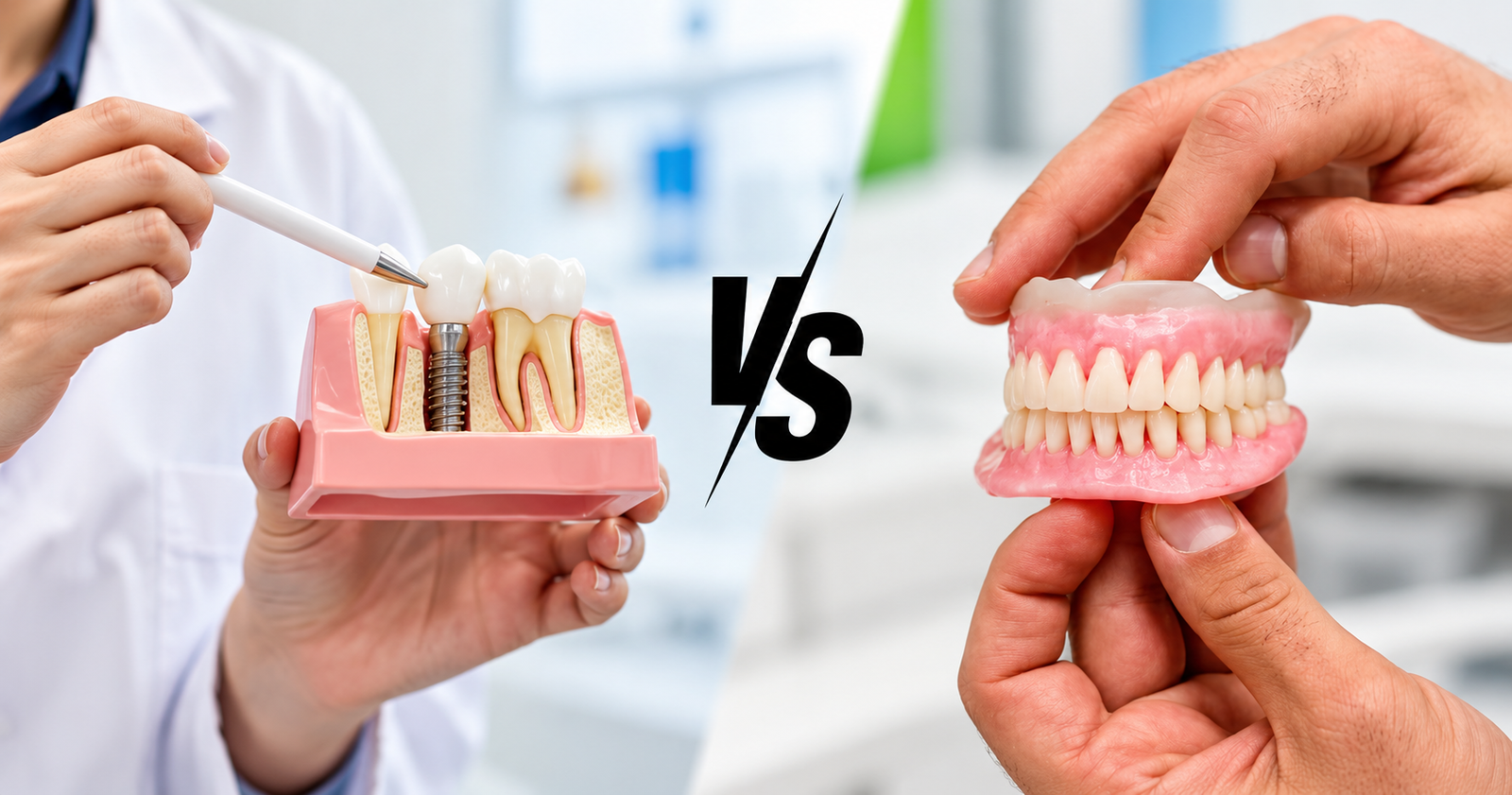
Dental implants are a long-term, fixed solution that replace the tooth root and protect jawbone, while dentures are a removable, lower upfront-cost option that rest on the gums. If you want permanent teeth that feel and function closest to natural ones, implants are usually the better investment. If budget, health, or time is a constraint, dentures or implant dentures can be a practical middle path.
Key Takeaways
- Implants are anchored in the jawbone; dentures sit on the gums and are removed daily.
- Dentures cost less upfront, but need relining, repair, and replacement over the years, so the gap narrows over time.
- Implants help preserve jawbone; conventional dentures do not, and bone can gradually shrink under them.
- Implant dentures (implant-supported dentures) combine both: fewer implants, a far more stable denture.
- The right choice depends on your bone health, gums, budget, age, and how many teeth are missing. A dentist can only confirm this after an examination.
What Are Dental Implants and Dentures?
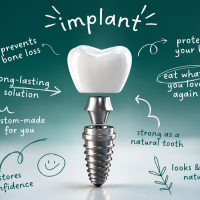
Dental implants are small biocompatible posts, usually made of titanium, placed in the jawbone to act as artificial tooth roots. Over a few months the bone bonds with the post (a process called osseointegration). A crown, bridge, or denture is then attached on top, so the new tooth is fixed in place and does not move when you eat or speak.
Dentures are removable false teeth made of acrylic, sometimes with a metal framework. A complete (full) denture replaces all teeth in an arch. A partial denture replaces a few missing teeth and clips onto the remaining natural ones. Both rest on your gums and are taken out for cleaning.
If you are comparing implants with other fixed options such as bridges, read our guide on Dental Implants vs Bridges: Which Is Better for Missing Teeth? (add internal link).
Dental Implants vs Dentures: Side-by-Side Comparison
| Factor | Dental Implants | Dentures |
| How they stay in | Fixed into jawbone | Rest on gums (adhesive or suction) |
| Feel | Closest to natural teeth | Can feel bulky; may shift |
| Chewing strength | Very strong, near natural | Reduced, especially with hard or sticky food |
| Jawbone | Helps preserve bone | Bone can shrink over time |
| Upfront cost | Higher | Lower |
| Long-term cost | Often lower per year of use | Relines, repairs, and replacements add up |
| Typical lifespan | Many years, often decades with care | Usually need replacing or relining every 5 to 8 years |
| Treatment time | Several months | Few weeks |
| Daily care | Brush and floss like natural teeth | Remove, soak, and clean daily |
| Surgery needed | Yes, minor surgical procedure | No |
Dentures Cost vs Implant Cost: What You Really Pay
When people search for dentures cost, they usually find that dentures are cheaper at the start. That is true. But the full picture over 10 to 20 years is different.
Dentures have a lower upfront price, but you should plan for:
- Relining or rebasing as your gums and bone change shape
- Repairs for cracks or chipped teeth
- Full replacement every several years
- Adhesives, cleaning tablets, and extra dental visits
Dental implants cost more on day one because they involve surgery, a titanium post, an abutment, and a crown. But a well-maintained implant does not need frequent replacement, so the cost spread across the years can be competitive.
The final price for either option depends on the number of teeth, the materials, whether bone grafting is needed, and the clinic’s technology. At TrueSmilez we give a written treatment plan after your examination so there are no surprises. You can see how implant treatment works on our Dental Implants in Mohali page.
Comfort, Eating, and Speaking
With implants, you can bite into an apple, chew roti or meat, and talk without worrying that your teeth will slip. Because the implant is fixed, pressure goes into the bone just like it does with natural roots.
With dentures, most people adapt within a few weeks, but common complaints include:
- Loose fit, especially in the lower jaw
- Sore spots from rubbing on gums
- Difficulty with hard, crunchy, or sticky food
- Slight changes in speech or taste
- Fear of the denture moving in public
If stability and confidence in everyday eating matter to you, implants clearly have the edge.
Jawbone Health: The Hidden Difference
Your jawbone stays strong because chewing pressure travels through tooth roots into the bone. When a tooth is lost, that stimulation stops and the bone in that area slowly begins to shrink.
- Dentures sit on top of the gums and do not stimulate the bone, so shrinkage can continue. Over the years this can change your facial shape and make dentures looser.
- Implants act like tooth roots, so they help maintain bone volume and facial structure.
This is one of the strongest reasons dentists recommend replacing missing teeth with implants where possible.
Implant Dentures: The Best of Both Worlds?
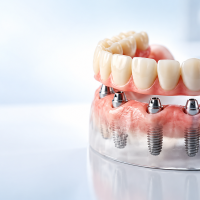
Implant dentures (also called implant-supported or implant-retained dentures) are a denture that clips or locks onto a small number of dental implants. Instead of replacing every tooth with its own implant, a few strategically placed implants hold the whole arch.
Benefits of implant dentures:
- Far more stable than conventional dentures
- Better chewing power and confidence
- Reduced bone loss compared to regular dentures
- Lower cost than replacing every tooth with an individual implant
- Can often be removable for cleaning, depending on the design
They are a popular choice for patients who are tired of loose dentures but do not want, or cannot afford, a full set of individual implants.
Full Mouth Implants: When Do They Make Sense?
Full mouth implants (also called full-arch or full mouth rehabilitation with implants) replace all teeth in the upper jaw, lower jaw, or both, using a set of implants that support a fixed bridge. Unlike dentures, this bridge is not removed by the patient.
Full mouth implants may suit you if:
- You have lost most or all of your teeth
- You want fixed, non-removable teeth
- You have enough bone, or are willing to have bone grafting if needed
- You are in good general and gum health
This is a bigger, longer treatment, so a detailed scan, bone assessment, and treatment plan come first.
Permanent Teeth: How Long Do They Last?
People searching for permanent teeth usually want a solution they will not have to think about every day. Here is the honest picture:
- Implants: The titanium post can last many years, and often decades, if you maintain good oral hygiene, avoid smoking, and attend regular check-ups. The crown on top may need replacement after wear, but the post usually stays.
- Dentures: They are not permanent. Plan on relining and replacing them periodically as your mouth changes.
No dental treatment is guaranteed forever. Implant success rates are widely reported to be high, but results depend on bone quality, gum health, habits, and aftercare.
Denture Alternatives: Other Options to Consider
If you are exploring denture alternatives, these are the main choices:
- Single dental implants: best when one or a few teeth are missing.
- Implant-supported bridges: replace several adjacent teeth with fewer implants.
- Implant dentures: a stable, more affordable step up from regular dentures.
- Full mouth (full-arch) implants: fixed teeth for an entire arch.
- Conventional dental bridges: use neighboring teeth as support; they need those teeth to be healthy and are discussed in our implants vs bridges guide.
- Partial dentures: a budget-friendly removable option for a few missing teeth.
A dentist will recommend the most suitable one after checking your teeth, gums, and jawbone.
Who Should Choose Implants, and Who Should Choose Dentures?
Implants are usually a better fit if you:
- Want fixed, natural-feeling teeth
- Have adequate jawbone, or can have it rebuilt
- Have healthy gums and good overall health
- Prefer a long-term solution
Dentures may be a better fit if you:
- Need a lower upfront cost
- Have significant bone loss and do not want grafting
- Have certain medical conditions or take medications that make surgery risky
- Want a faster, non-surgical solution
Smokers and people with untreated gum disease have a higher risk of implant complications, so these issues should be addressed first.
What to Expect: Implant Process vs Denture Process
Dental implants (typical steps):
- Consultation, examination, and 3D scan
- Implant placement under local anesthesia
- Healing and bone integration over a few months
- Abutment and crown (or bridge/denture) placement
- Regular follow-ups
Dentures (typical steps):
- Consultation and impressions
- Trial fitting
- Final denture delivery
- Adjustments over the first few weeks
Implants take longer, but patients commonly report much better comfort once treatment is complete.
Dental Implants in Mohali at TrueSmilez
At TrueSmilez, our team plans every case individually. We examine your gums, bone, and bite, explain all your options clearly (including dentures and implant dentures), and recommend only what suits your needs and budget. You can explore our Expert Dental Solutions in Mohali or go straight to Dental Implants in Mohali to learn more.
Ready to decide? Book a consultation at TrueSmilez, Mohali, and get a personalised treatment plan.
Frequently Asked Questions
Are dental implants better than dentures?
For most patients with healthy gums and enough bone, yes. Implants are fixed, preserve jawbone, and feel closer to natural teeth. Dentures are still a valid option when budget, health, or time is limited.
How much do dentures cost compared to implants?
Dentures cost less upfront, while implants cost more initially but usually need fewer replacements. The final price depends on the number of teeth, materials, and whether extra procedures like bone grafting are needed. A dentist can quote exactly after an examination.
What are implant dentures?
Implant dentures are dentures that attach to a few dental implants for extra stability. They offer better grip and chewing ability than conventional dentures, at a lower cost than replacing every tooth with an individual implant.
Are full mouth implants permanent?
Full mouth implants are designed to be a long-lasting, fixed solution, and the implants themselves can last for many years with good care. Crowns or bridges may need maintenance or replacement over time.
How long do dentures last before they need replacing?
Most dentures need relining or replacement every 5 to 8 years as the gums and jawbone change shape, though this varies from person to person.
Is getting a dental implant painful?
Implant placement is done under local anesthesia, so you should not feel pain during the procedure. Mild soreness or swelling for a few days afterwards is common and is usually manageable with medication prescribed by your dentist.
What are the best denture alternatives?
The main denture alternatives are single implants, implant-supported bridges, implant dentures, full mouth implants, and conventional bridges. The best one depends on how many teeth are missing and the condition of your bone and gums.
Can I switch from dentures to implants later?
Often yes, provided you have enough healthy jawbone. Some people need bone grafting first. A dental scan will show whether you are a candidate.